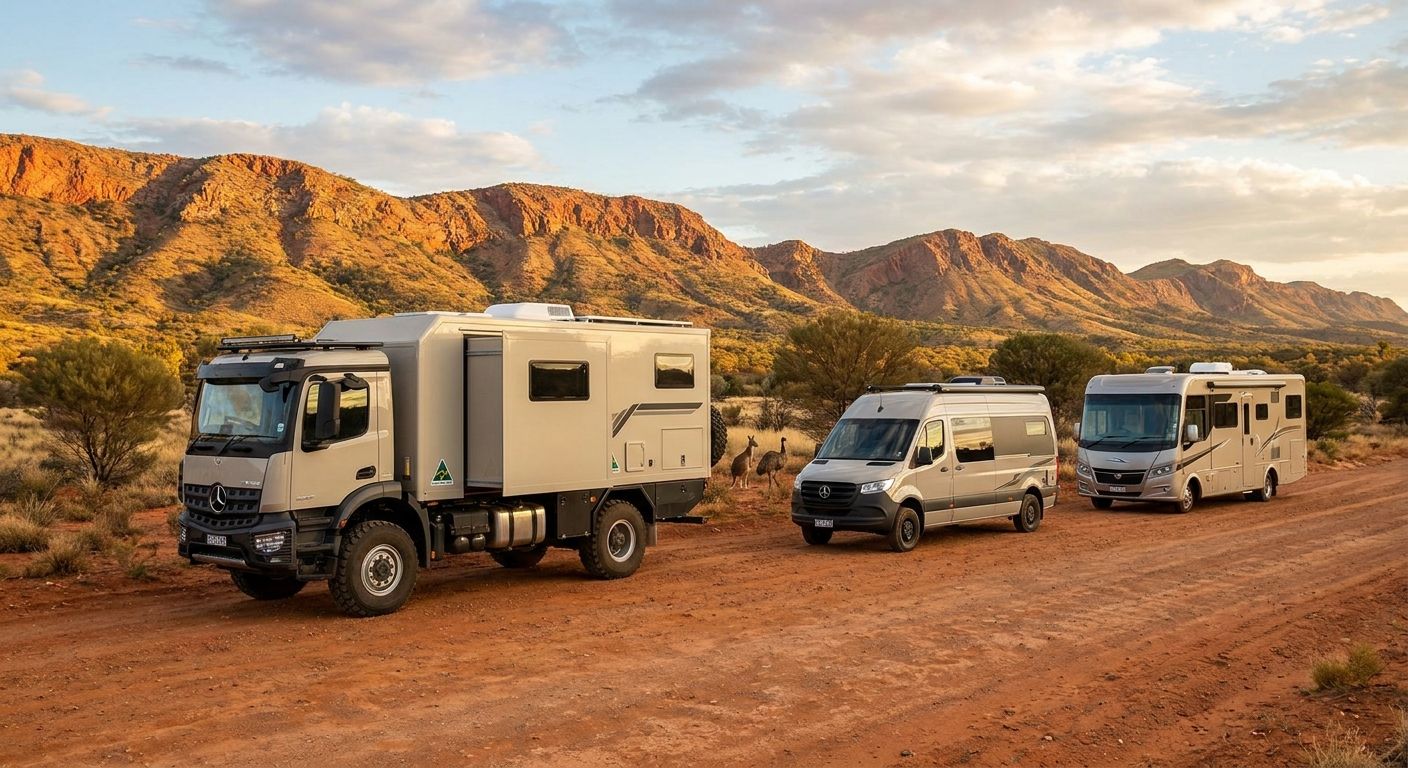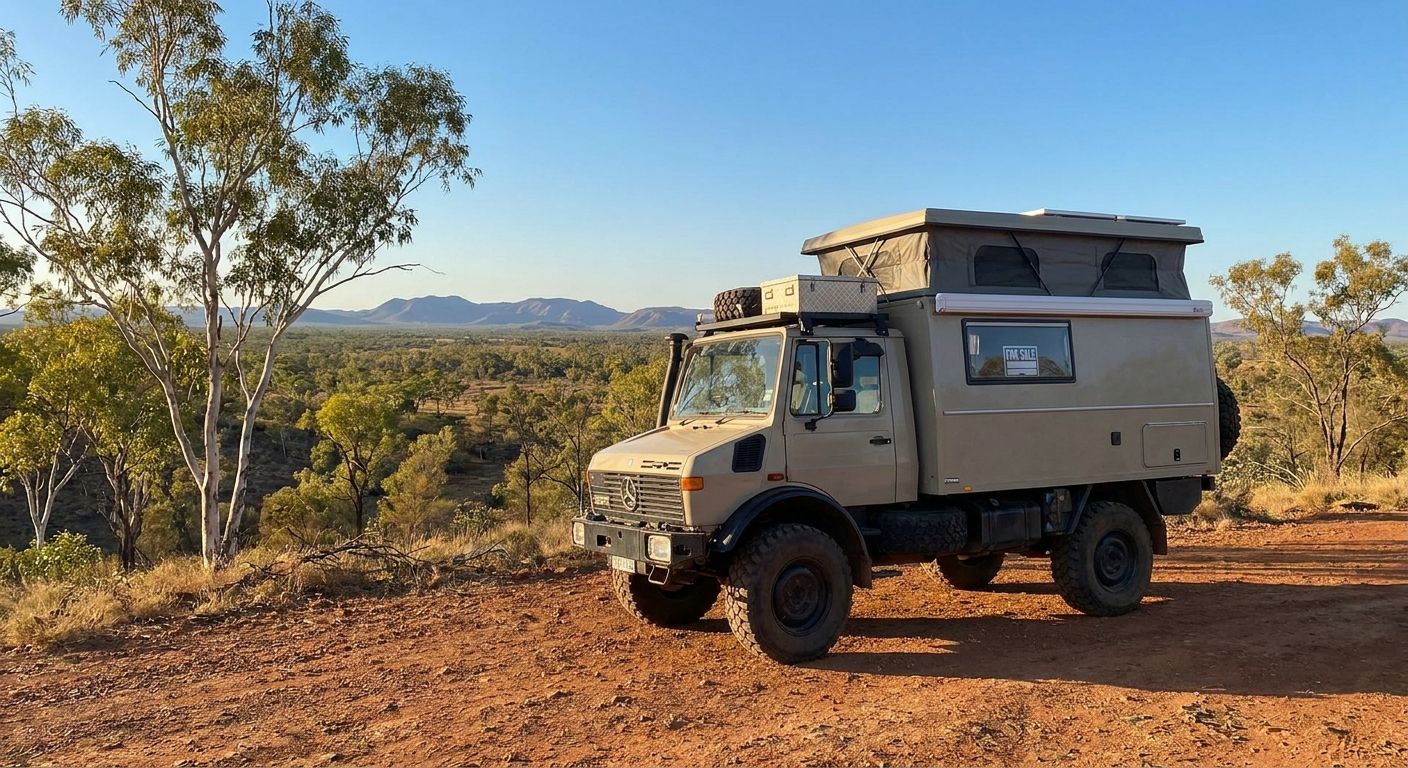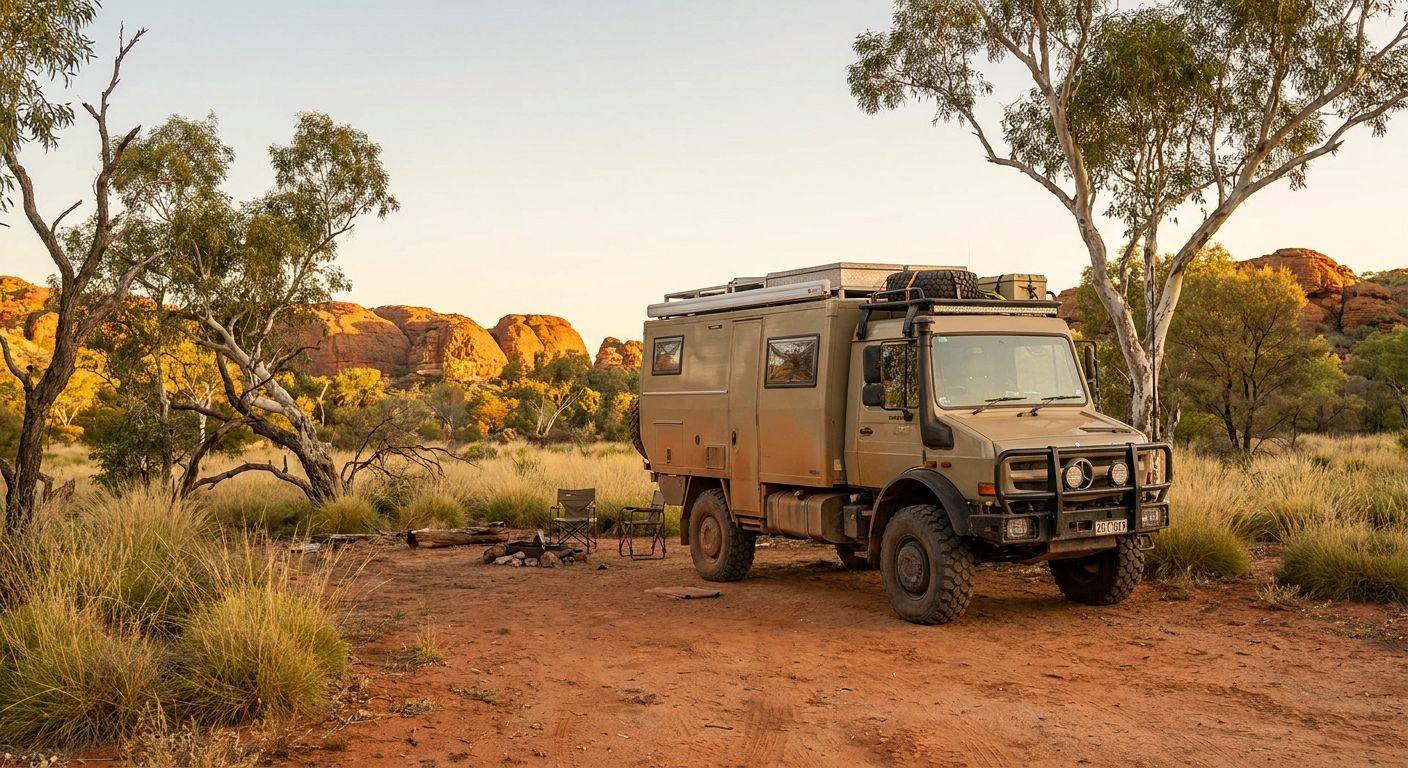
Outback touring in 2026 punishes vehicles that were never designed for it — corrugations, bulldust, and 400km between fuel stops separate the motorhomes built for the job from the ones dressed up for the brochure. This guide ranks the off-road motorhomes worth shortlisting in Australia right now, based on chassis, ground clearance, and what each one is actually engineered to survive.
- Latitude ibeX 4x4 wins outright for genuine 4x4 outback touring on the Iveco Daily 70C chassis.
- Latitude Element 27 suits couples running sealed roads and station tracks, not deep sand or river crossings.
- Latitude Meridian 30 trades off-road bias for family living space on the same 70C platform.
- Zone RV and Trakka round out the field for dedicated expedition and compact off-grid builds.
- An off road motorhome australia buyer should match chassis and ground clearance to the terrain, not the marketing copy.
Best overall: Latitude ibeX 4x4. Best for sealed-and-gravel touring: Latitude Motorhomes Element 27. Best for family living space: Latitude Meridian 30. Best for dedicated expedition builds: Zone RV. Best for compact off-grid bush camping: Trakka.
Why this matters
A lot of motorhomes marketed as "off-road" in 2026 are 2WD tourers with a bull bar and a decal. That's fine for a graded dirt road to a caravan park, but it falls apart on a real outback route — corrugated stock routes, sand ridges, river crossings after rain.
The distinction that actually matters is chassis and drivetrain, not paint scheme. A motorhome built on a genuine 4x4 chassis with real ground clearance behaves differently at 80km/h on corrugations than one that isn't. That gap shows up as cracked panels, failed water tanks, and a ruined trip — not as a warranty claim you can fix on the side of the Birdsville Track.
What makes the best off-road motorhome
- Chassis and drivetrain — genuine 4x4 versus 4x2, and the GVM class the chassis sits in
- Ground clearance — off-road credentility in the Australian 4x4 market generally starts around 200mm; less than that and deep ruts and washouts become a problem
- Payload margin — how much weight is left for water, fuel, tools and gear after the build itself
- Water and power capacity — how many days you can sit off-grid before needing a tap or a generator
- Layout practicality — whether the floor plan still works when you're living in it, not just parked at a show
At a glance
| Model | Best for | Standout feature | Key limitation |
|---|---|---|---|
| Latitude ibeX 4x4 | Genuine 4x4 outback tracks | Iveco Daily 70C 4x4 chassis with off-road-biased build | Overkill and extra fuel burn for bitumen-only travellers |
| Latitude Element 27 | Couples on sealed roads and station tracks | Compact Iveco Daily 70C build, Burleigh Heads-made | Not a true 4x4 — not built for deep sand or river crossings |
| Latitude Meridian 30 | Families needing more living space | Larger floor plan on the same 70C platform | Length and turning circle work against tight bush tracks |
| Zone RV expedition-class | Multi-week remote expedition touring | Dedicated 4x4 builds aimed squarely at long-range remote travel | Narrower model range than a full-line manufacturer |
| Trakka | Compact off-grid bush camping | Smaller footprint suited to tighter tracks and easier reversing | Less internal living space than the larger 4x4 builds above |
1. Latitude ibeX 4x4: best off-road motorhome for genuine outback tracks
The ibeX 4x4 is Latitude's dedicated off-road model, built on the Iveco Daily 70C chassis — the 7.0-tonne GVM class of Iveco's cab-chassis range — with four-wheel-drive capability aimed at the terrain a bitumen-only motorhome can't touch. It's the model in the Latitude range designed specifically for the outback trip, not the caravan park loop.
Latitude ibeX 4x4 pros:
- Genuine 4x4 drivetrain on a chassis rated for the 7.0-tonne GVM class
- Built at the Burleigh Heads factory alongside Latitude's other models, so the same build standard applies
- Suited to corrugated stock routes and unsealed outback roads that would flex a 2WD chassis
- Sits in the range specifically for buyers who need capability first, not just comfort
Latitude ibeX 4x4 cons:
- Four-wheel-drive capability adds weight and typically increases fuel use versus a 2WD equivalent
- Not the model to buy if 90% of your travel is sealed roads and caravan parks — that's what Element 27 is for
Best for: buyers whose 2026 trip plan actually includes unsealed outback routes, not just the idea of one.
Verdict: Buy if genuine off-road capability is a requirement, not a nice-to-have.
2. Latitude Element 27: best off-road motorhome for sealed and gravel touring
Element 27 is Latitude's compact luxury build on the Iveco Daily 70C chassis, made at the same Burleigh Heads factory. It's aimed at couples covering long distances on sealed roads and well-formed gravel — grey nomad territory — rather than genuine 4x4 track work.
Latitude Element 27 pros:
- Compact footprint on the Iveco Daily 70C chassis, easier to manoeuvre than the larger Meridian 30
- Resort-style fit-out built for two people living in it full-time
- Same Burleigh Heads build standard as the rest of the Latitude range
Latitude Element 27 cons:
- Not a 4x4 — it's not the pick for deep sand, river crossings, or the harder Cape and Simpson-style routes
- Smaller footprint means less storage than Meridian 30 for long, gear-heavy trips
Best for: couples doing the classic Australian lap on sealed roads with occasional dirt, not the hardest outback tracks. Read more about the Element 27 motorhome build.
Verdict: Buy if your 2026 route is mostly sealed and graded roads with the occasional gravel detour.
3. Latitude Meridian 30: best off-road motorhome for family living space
Meridian 30 is the largest model in Latitude's range, built on the same Iveco Daily 70C platform as Element 27 and ibeX 4x4, but stretched for more internal living space. It's the pick for families or couples who want to live in the motorhome for extended remote trips without feeling cramped.
Latitude Meridian 30 pros:
- Largest floor plan in the range, built for extended stays rather than short trips
- Same Iveco Daily 70C chassis and Burleigh Heads build quality as the rest of the lineup
- More storage and living space than Element 27 for families or long-haul touring
Latitude Meridian 30 cons:
- Length and turning circle work against you on tight bush tracks and narrow outback camp sites
- Not the 4x4-specced model — for genuine deep off-road work, ibeX 4x4 is the correct choice
Best for: families who need the space and plan to stick mostly to formed roads and larger remote campgrounds.
Verdict: Buy if space is the priority and your terrain is remote-but-formed rather than genuine 4x4 track.
4. Zone RV expedition-class: best for hardcore remote expedition touring
Zone RV builds dedicated 4x4 expedition motorhomes aimed at buyers planning multi-week trips well off the beaten track. The brand's positioning in the Australian market sits squarely at the expedition end of the category, ahead of general touring.
Zone RV pros:
- Purpose-built for long-range remote expedition travel rather than general touring
- Narrower focus means the range is tightly aimed at serious off-road buyers
Zone RV cons:
- Narrower model range than a full-line manufacturer covering multiple use cases
- Buyers should confirm current build specifications directly with the manufacturer before comparing against a specific trip plan
Best for: buyers whose entire 2026 itinerary is remote expedition-grade touring, not a mix of sealed and unsealed roads.
Verdict: Hold for research — confirm current specs and lead times with Zone RV directly before deciding.
5. Trakka: best for compact off-grid bush camping
Trakka builds motorhomes aimed at buyers who want off-grid capability in a smaller footprint than the larger 4x4 expedition builds. The smaller size trades internal living space for easier handling on tighter bush tracks.
Trakka pros:
- Compact footprint suited to tighter tracks and easier reversing at camp
- Off-grid orientation aimed at bush camping rather than caravan-park touring
Trakka cons:
- Less internal living space than the larger 4x4 builds in this list
- Smaller footprint means less storage for gear-heavy, multi-week outback trips
Best for: solo travellers or couples prioritising manoeuvrability over living space.
Verdict: Hold for research if you need more living space than a compact build offers — otherwise a reasonable shortlist entry.
How we ranked
Each model was assessed against the five criteria above: chassis and drivetrain, ground clearance, payload margin, water and power capacity, and layout practicality. The ranking reflects use case fit, not a single "best overall" score — an off road motorhome australia buyer doing the Cape in 2026 has a different correct answer than one doing the east coast with occasional dirt.
“A motorhome only counts as off-road if it can handle corrugations at highway speed without shaking apart.”
Book a factory visit
See the Iveco Daily 70C build in person at the Burleigh Heads factory.
Which off-road motorhome should you choose?
If your 2026 route includes genuine unsealed outback track work, the Latitude ibeX 4x4 is the correct starting point — it's the model in this list built specifically for that terrain on the Iveco Daily 70C chassis. If your travel is mostly sealed and graded roads, Element 27 or Meridian 30 make more sense than paying for 4x4 capability you won't use. Zone RV and Trakka earn their place for buyers whose entire trip is expedition-grade or bush-camp-focused rather than mixed touring.
Don't buy on the badge. Buy on the route you're actually planning to drive.
FAQ
What is the best off-road motorhome in Australia for 2026?
The Latitude ibeX 4x4 is the strongest pick for genuine 4x4 outback touring in 2026, built on the Iveco Daily 70C chassis. For sealed-and-gravel touring, Latitude Element 27 is the better fit.
Is the Iveco Daily 70C good for off-road touring?
The Iveco Daily 70C sits in the 7.0-tonne GVM class, giving it more payload margin than lighter cab-chassis platforms. Whether a specific build handles off-road terrain depends on whether it's a 4x4 or 4x2 variant.
How much ground clearance do off-road motorhomes need?
Off-road credentials in the Australian 4x4 market generally start around 200mm of ground clearance. Below that, deep ruts, washouts and creek crossings become a real risk to the chassis and underbody.
Can you drive a motorhome on unsealed outback roads?
Yes, but only motorhomes with the right chassis and drivetrain for it. A 2WD motorhome can handle graded gravel, but corrugated stock routes and sand call for a genuine 4x4 build like the Latitude ibeX 4x4.
What's the difference between a 4x4 motorhome and a caravan?
A 4x4 motorhome has its own engine and drivetrain built into the chassis, so the whole vehicle is off-road capable. A caravan is towed, so its off-road ability depends entirely on the tow vehicle.
Are Zone RV motorhomes good for remote touring?
Zone RV builds dedicated 4x4 expedition motorhomes aimed at multi-week remote trips, positioning the brand at the expedition end of the Australian market. Confirm current specifications directly with the manufacturer before comparing against a specific route.
How much payload does an off-road motorhome need for outback trips?
Payload margin matters more than any single spec sheet number, since water, fuel and gear all eat into it fast on a multi-week trip. A chassis in the 7.0-tonne GVM class, like the Iveco Daily 70C, generally leaves more margin than lighter platforms.
Where are Latitude Motorhomes built?
Latitude Motorhomes builds the Element 27, Meridian 30 and ibeX 4x4 at its factory in Burleigh Heads on the Gold Coast, Australia.
One last thing
The number buyers skip past is ground clearance, not horsepower. A motorhome that looks tough in photos but sits below the roughly 200mm off-road benchmark will bottom out on the same washouts a genuine 4x4 build clears without slowing down — check that spec before anything else on the sheet.
Related: check the Latitude Motorhomes range directly for current model availability before locking in a 2026 route.