Full-time motorhome living in Australia means one vehicle has to work as a home, a workshop, a water tank and a highway hauler for 300+ days a year — most caravan-park weekenders can't do that. This guide ranks the motorhomes built for it, using layout, chassis, and range as the sorting criteria, not brochure adjectives.
- Best overall for motorhomes for full-time living: the Element 27 on the Iveco Daily 70C chassis.
- Best for full-time couples wanting extra storage: the Meridian 30.
- Best for remote and outback full-time touring: the ibeX 4x4.
- All three are built at Latitude Motorhomes' Burleigh Heads factory on the Gold Coast.
- Chassis choice matters more than floorplan for anyone living aboard year-round.
Why this matters
A motorhome bought for two weeks a year forgives a lot — a cramped shower, a small fridge, a tight turning circle. Full-time living doesn't forgive any of it, because you're living with the compromise every single day, not just on holidays.
The three models compared here are built by Latitude Motorhomes on the Iveco Daily 70C chassis, which matters for full-timers because Iveco's service network reaches most regional Australian towns — a real consideration when your home needs a mechanic, not just a caravan repairer. Beyond chassis, the differences between these models come down to fixed bed access, storage volume, and how much ground clearance you actually need for the roads you'll cover in 2026 and beyond.
What makes the best motorhome for full-time living
- Chassis and service network — a chassis with dealer and service coverage across regional Australia, not just capital cities
- Fixed bed access — a bed you don't have to convert from a dinette every night, because full-timers do this 300+ times a year
- Water and storage capacity — enough fresh water and locker space to go multiple days without resupply
- Layout for daily living — a kitchen and bathroom sized for cooking and washing every day, not just weekend use
- Ground clearance and traction — matters only if remote or unsealed routes are part of the plan
- Livable footprint on the road — a length and width you're comfortable driving and parking daily, not just occasionally
At a glance
| Model | Best for | Standout feature | Key limitation |
|---|---|---|---|
| Element 27 | Full-time living, compact daily footprint | Fixed bed layout on the Iveco Daily 70C | Less storage volume than the Meridian 30 |
| Meridian 30 | Full-time couples needing more space | Larger living and storage area | Bigger footprint to park and manoeuvre daily |
| ibeX 4x4 | Full-time remote and outback touring | 4x4 drivetrain for unsealed roads | Overkill if you're mostly sticking to sealed highways |
1. Element 27: best motorhome for full-time living in a compact footprint
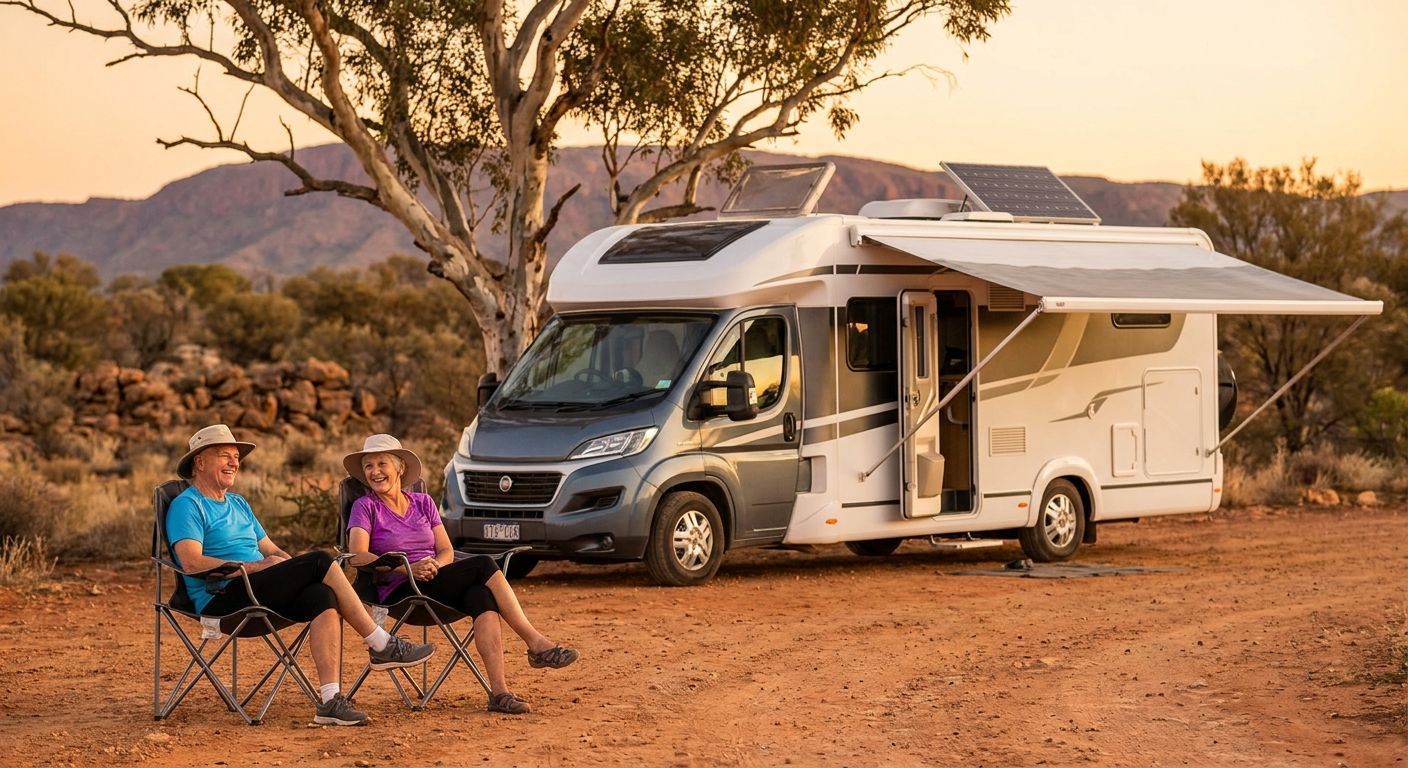
The Element 27 is built on the Iveco Daily 70C chassis at the Burleigh Heads factory, sized to be easy to drive daily while still carrying a fixed bed and a full kitchen. It's aimed at solo travellers and couples who want a motorhome they can park at a shopping centre without a three-point turn, but who aren't willing to fold a bed out every night for a year.
Element 27 pros:
- Fixed bed, no daily conversion from a dinette or lounge
- Compact enough for daily driving and suburban parking
- Iveco Daily 70C chassis backed by a national service network
Element 27 cons:
- Less locker and storage volume than the Meridian 30
- Tighter kitchen bench space for anyone who cooks large meals daily
Best for: full-timers who want one comfortable, easy-to-drive base without excess bulk.
Verdict: Buy — if daily drivability and a fixed bed matter more to you than maximum storage, this is the pick.
2. Meridian 30: best motorhome for full-time living with more space
The Meridian 30 steps up in length over the Element 27, translating into more storage lockers and a larger living area — the difference full-time couples feel after month three on the road, when gear accumulates and clothes for four seasons need somewhere to live. It sits on the same Iveco Daily 70C platform, so servicing logistics don't change even though the floorplan does.
Meridian 30 pros:
- More storage volume for long-term gear and seasonal clothing
- Larger living area, better for two people working or relaxing separately during the day
- Same Iveco Daily 70C chassis reliability as the Element 27
Meridian 30 cons:
- Bigger footprint to reverse and park at busy caravan parks
- Not the pick if a compact daily-driver feel is the priority
Best for: full-time couples who've outgrown a compact layout and want room to spread out.
Verdict: Buy — the right call for anyone who's tried full-timing in a smaller van and felt short on storage.
3. ibeX 4x4: best motorhome for full-time living off the beaten track
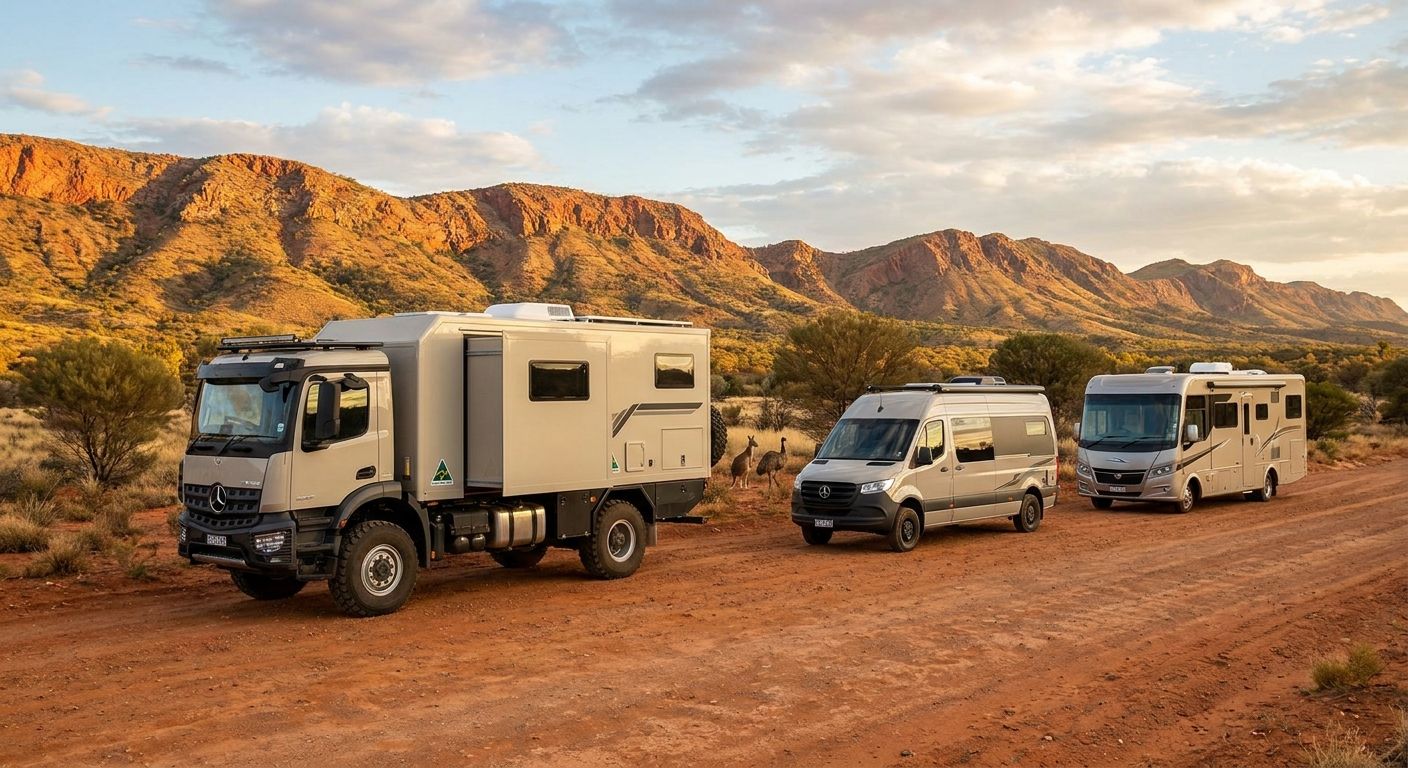
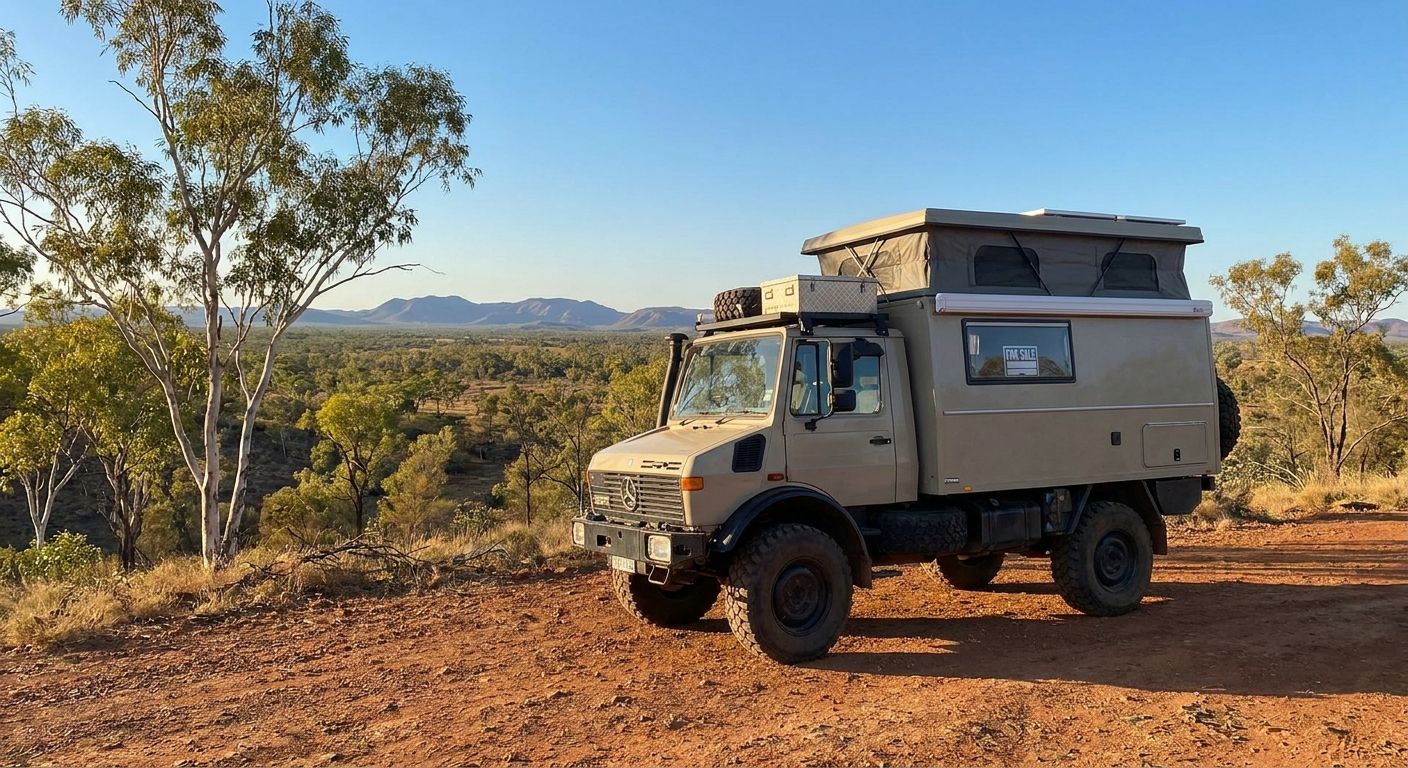
The ibeX 4x4 takes the same Iveco Daily 70C base and adds four-wheel drive, built for full-timers whose route includes unsealed roads, station stays, or outback tracks rather than a loop of sealed highways between caravan parks. It's the only model in the range built specifically around traction and clearance rather than around interior floor space.
ibeX 4x4 pros:
- Four-wheel drive for unsealed and outback routes other full-timers can't reach
- Same Iveco Daily 70C chassis heritage and service network as the road-only models
- Suited to genuinely remote, extended off-grid stretches
ibeX 4x4 cons:
- More vehicle than you need if your full-time route stays on sealed roads
- Off-road capability trades against some interior efficiency versus the road-focused models
Best for: full-timers whose year includes serious unsealed and outback travel, not just grey nomad loops.
Verdict: Buy — but only if remote touring is actually part of your plan; otherwise the Element 27 or Meridian 30 does the job for less complexity. For a wider field of options in this category, see the ranked 4x4 motorhomes for sale in Australia and the dedicated guide to off-road motorhomes for outback touring.
“If your route never leaves sealed roads, a 4x4 drivetrain is weight and cost you don't need to carry full-time.”
How we ranked these
Each model was scored against the six criteria above: chassis and service network, fixed bed access, water and storage capacity, daily-living layout, ground clearance, and on-road footprint. All three share the Iveco Daily 70C chassis, so the ranking comes down to floorplan and drivetrain fit for how you'll actually use the vehicle in 2026 — compact daily driving, extra storage for two, or genuine remote-road capability. For context on how these stack up against other Australian builders, the guide to motorhome manufacturers in Australia compares chassis choices and build approaches across the industry.
Book a factory visit
See the Element 27, Meridian 30 and ibeX 4x4 built at Burleigh Heads.
Which motorhome should you choose for full-time living?
If you're undecided, start with the question of route, not floorplan: sealed highways and caravan parks point to the Element 27 or Meridian 30; unsealed roads and remote stretches point to the ibeX 4x4. For most people starting full-time life in 2026, the Element 27 is the safer first choice — compact enough to drive daily, with a fixed bed that removes the nightly conversion routine that wears people down by month two.
FAQ
What's the best motorhome for full-time living in Australia in 2026?
The Element 27 is the strongest all-round pick for full-time living in 2026, built on the Iveco Daily 70C chassis with a fixed bed and a daily-drivable footprint. The Meridian 30 suits full-timers who need more storage, and the ibeX 4x4 suits those covering unsealed or outback routes.
Is the Iveco Daily 70C a good chassis for full-time motorhome living?
Yes — the Iveco Daily 70C is backed by a service network that reaches most regional Australian towns, which matters when your home also needs a mechanic on the road. All three Latitude Motorhomes models share this chassis.
Do I need a 4x4 motorhome to live full-time on the road?
Only if your route includes unsealed roads or remote outback tracks. Full-timers sticking to sealed highways and caravan parks are better served by a road-focused model like the Element 27 or Meridian 30.
How much storage does a full-time motorhome actually need?
Enough for multi-season clothing, tools, and several days of supplies without resupply — storage needs grow the longer you're on the road, which is why models like the Meridian 30 add locker volume over a compact layout.
Is a fixed bed better than a convertible bed for full-time living?
For full-timers, yes — converting a dinette to a bed every night for a year adds up as daily friction that a fixed bed layout, like the one in the Element 27, removes entirely.
Where are Latitude Motorhomes built?
Latitude Motorhomes builds the Element 27, Meridian 30 and ibeX 4x4 at its factory in Burleigh Heads on the Gold Coast, Queensland.
Can a full-time motorhome handle both sealed and unsealed roads?
The ibeX 4x4 is built for that mix, with four-wheel drive for unsealed sections; the Element 27 and Meridian 30 are built primarily for sealed-road touring.
One last thing
The question that separates a good full-time motorhome from a bad one isn't the floorplan — it's whether you can get it serviced in a town with a population under 5,000. That's the real reason chassis choice sits at the top of the criteria list above, ahead of bed type or storage volume.