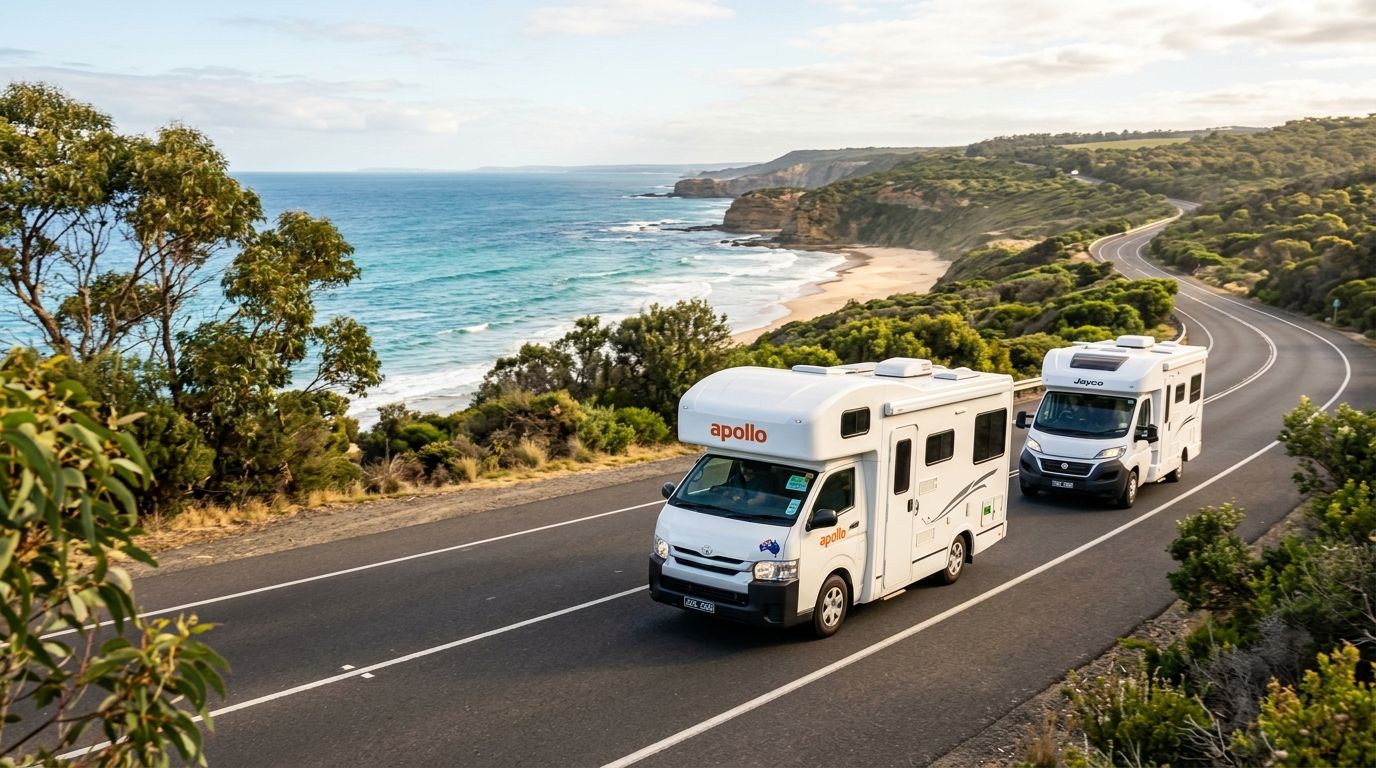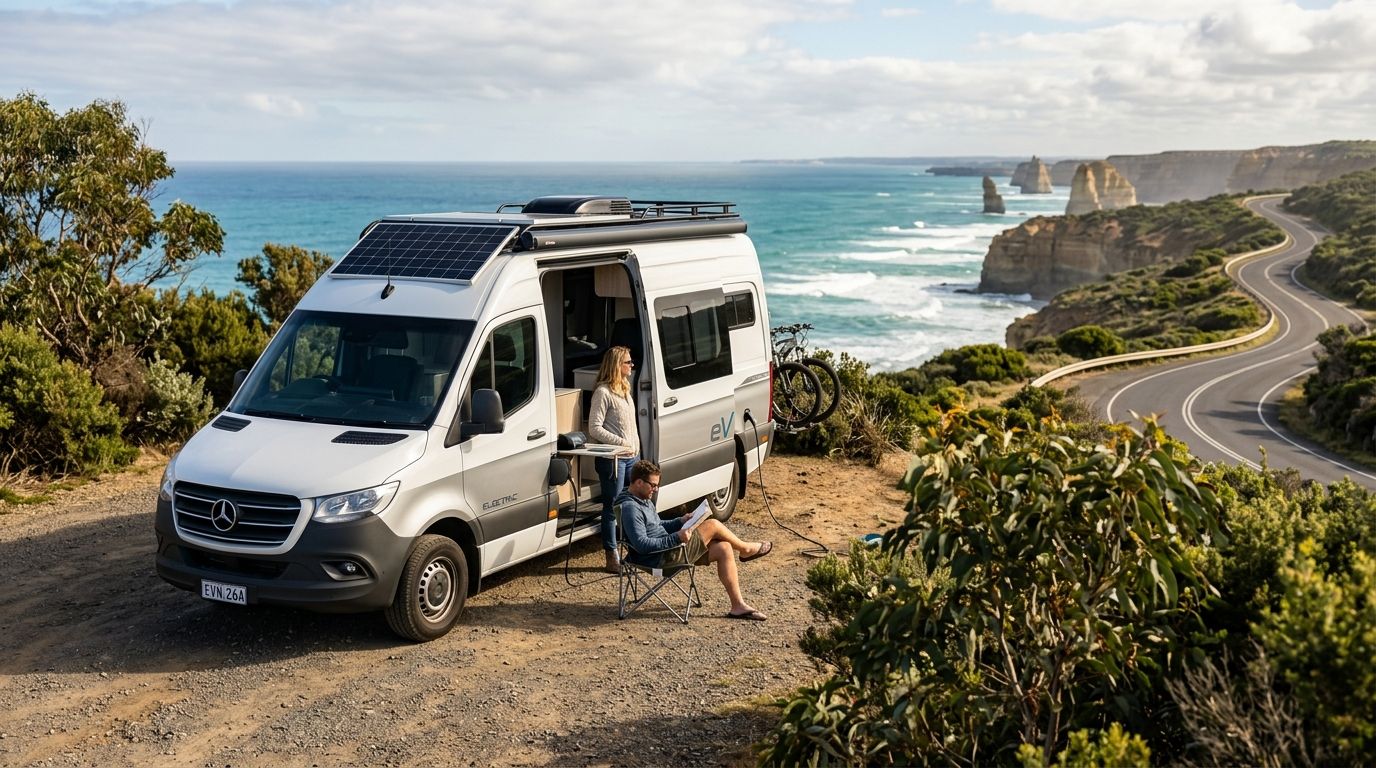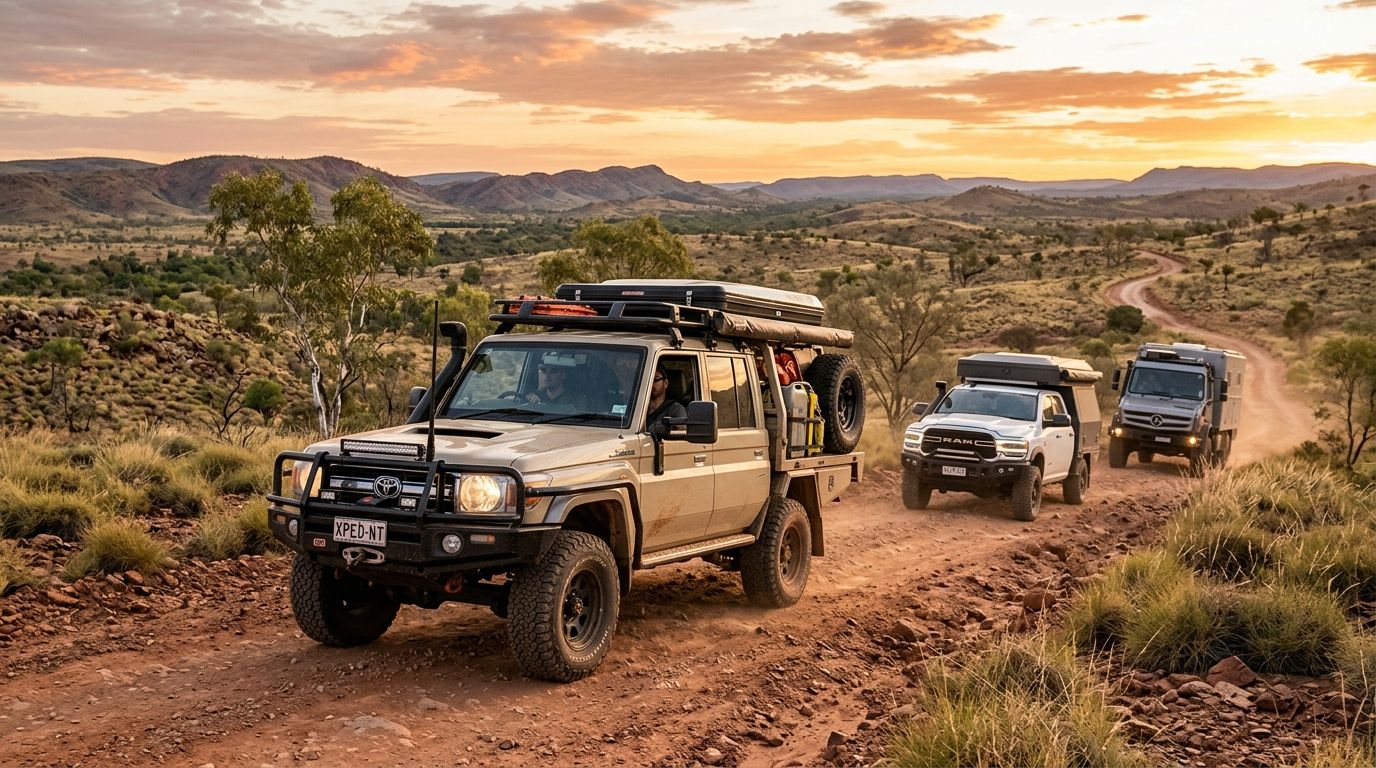
Australia's outback tracks punish soft-road vehicles, and picking the wrong rig for a Gibb River Road or Simpson Desert run means turning back early or breaking down where help is hours away. Best overall: Latitude ibeX 4x4. Best for long-range solo and couple touring: Latitude Element 27. Best for full-time luxury living: Latitude Meridian 30.
- Latitude ibeX 4x4 on the Iveco Daily 70C chassis is the strongest overall pick among expedition vehicles Australia buyers shortlist for outback touring in 2026.
- Latitude Element 27 suits solo and couple long-range touring where a nimble footprint matters more than floor space.
- Latitude Meridian 30 is the largest Latitude floor plan and the right call for full-time living on the road.
- Off-road 4x4 conversion campers and hybrid caravans remain viable budget alternatives but trade comfort for lower upfront cost.
- Luxury bus motorhomes carry the most people but struggle on narrow, corrugated outback tracks.
Why this matters
Most "best motorhome" lists are written for bitumen touring. Expedition vehicles for overland travel in Australia face a different test: corrugation, river crossings, and stretches where the nearest mechanic is a day's drive away.
A vehicle built for suburban caravan parks will shake itself apart on a track like the Gibb River Road, which runs roughly 660 km of unsealed surface through the Kimberley. A Simpson Desert crossing covers around 550 km of soft dune track with no fuel between stops. Chassis, ground clearance, and payload margin matter more here than cabinetry finish.
Latitude Motorhomes builds its range on the Iveco Daily 70C chassis specifically because that platform offers a 4x4 configuration and diesel drivetrain suited to this kind of touring, rather than adapting a van built for city delivery runs.
What makes the best expedition vehicle for overland travel
- 4x4 or all-wheel drive availability on the base chassis, not just an aftermarket lift kit
- Payload and GVM headroom for water, fuel, tools, and gear once the pantry is full
- Fuel and water tank range long enough to cover the distance between outback fuel stops
- Off-grid power capacity — solar and battery storage that keeps fridges and lights running without shore power
- Build integrity under corrugation — cabinetry, plumbing, and wiring that survive repeated vibration
- Service network reach for the chassis brand once you're outside a capital city
Expedition vehicles for overland travel in Australia at a glance
| Vehicle | Best for | Standout feature | Key limitation |
|---|---|---|---|
| Latitude ibeX 4x4 | Remote outback overlanding | 4x4 drivetrain on the Iveco Daily 70C chassis | Iveco's remote service network is thinner than Toyota's or Isuzu's |
| Latitude Element 27 | Solo/couple long-range touring | Compact 27-foot layout stays nimble on tight tracks | Less floor space than the Meridian 30 |
| Latitude Meridian 30 | Full-time luxury living | Largest floor plan in the Latitude range | Bigger footprint is harder to place on tight bush campsites |
| Off-road 4x4 conversion campers | Technical low-range tracks | Built on proven 4x4 utes and wagons with low-range gearing | Living space is cramped next to a purpose-built motorhome |
| Off-road hybrid campers/caravans | Budget entry point | Lower upfront cost than a self-contained motorhome | Needs a separate tow vehicle and limited off-grid power |
| Luxury bus motorhomes | Large touring groups | Coach-width interior with the most sleeping capacity | Wide turning circle struggles on narrow outback tracks |
1. Latitude ibeX 4x4: best expedition vehicle for remote outback overlanding
The ibeX 4x4 is Latitude Motorhomes' purpose-built answer to outback touring, built on the Iveco Daily 70C chassis with a 4x4 drivetrain rather than a two-wheel-drive base with off-road styling bolted on. It's constructed at the company's Burleigh Heads factory alongside the rest of the range, so the same build standards apply to the off-road model.
Latitude ibeX 4x4 pros:
- 4x4 drivetrain built into the base chassis, not an aftermarket conversion
- Iveco Daily 70C platform is a genuine cab-chassis truck base, not a van adapted for weight it wasn't designed to carry
- Manufactured in the same Burleigh Heads facility as Latitude's other models, so build quality is consistent across the range
Latitude ibeX 4x4 cons:
- Iveco's dealer and parts network in regional Australia is smaller than Toyota's or Isuzu's, so factor in extra time for scheduled servicing on long circuits
- A 4x4 chassis and off-road-rated build typically means less interior width than a two-wheel-drive coach-built model
Best for: buyers whose touring plans include unsealed tracks like the Gibb River Road or Cape York. Verdict: Buy — it's the only vehicle on this list purpose-built for that job.
2. Latitude Element 27: best expedition vehicle for solo and couple long-range touring
The Element 27 is the compact end of the Latitude range, still on the Iveco Daily chassis but sized for one or two people covering long distances rather than a family living aboard full-time.
Element 27 pros:
- Smaller footprint than the Meridian 30 makes it easier to park at remote campsites and fit through narrower access tracks
- Same Iveco Daily chassis heritage as the rest of the range
- Suited to buyers who want touring range without the bulk of a full-time living rig
Element 27 cons:
- Less storage and living space than the Meridian 30 for anyone planning to live aboard long-term
- Not the 4x4-specific model — buyers set on serious unsealed-track touring should compare it against the ibeX 4x4 first
Best for: couples or solo travellers prioritising a nimble, easy-to-drive rig over maximum living space. Verdict: Buy.
3. Latitude Meridian 30: best expedition vehicle for full-time luxury living
The Meridian 30 is the largest floor plan Latitude Motorhomes builds, aimed at buyers planning to live aboard for extended periods rather than take occasional trips. It's built on the same Iveco Daily 70C foundation as the Element 27 and ibeX 4x4.
Meridian 30 pros:
- Largest interior in the Latitude range, built for full-time living rather than short holidays
- Shares the Iveco Daily 70C chassis platform with the rest of the range, so the same durability applies
- Manufactured to order at the Burleigh Heads factory, allowing configuration to the buyer's touring plans
Meridian 30 cons:
- The larger footprint is harder to manoeuvre and park on tight or unmarked bush campsites
- Not the model to choose if remote unsealed-track capability is the top priority — that's the ibeX 4x4's job
Best for: buyers planning to live aboard full-time rather than take shorter trips. Verdict: Buy for full-timers; Hold if you only tour a few weeks a year, where the Element 27 is the better fit.
4. Off-road 4x4 conversion campers: best for technical low-range tracks
These are camper conversions built onto existing 4x4 utes or wagons — think a canopy or slide-on camper fitted to a vehicle that already has low-range gearing and proven off-road geometry. They're common on the harder tracks where ground clearance and approach angle matter more than living space.
Off-road 4x4 conversion camper pros:
- Built on a base vehicle already proven for technical tracks and low-range work
- Generally lighter and more manoeuvrable than a coach-built motorhome on narrow trails
- Wide range of donor vehicles and camper fit-outs to choose from
Off-road 4x4 conversion camper cons:
- Living space is a fraction of a purpose-built motorhome — no walk-around interior
- Build quality varies enormously between fitters, so vetting the conversion shop matters as much as the vehicle
Best for: buyers prioritising the most technical tracks over comfort. Verdict: Hold — worth it only if you've inspected the specific conversion's workmanship.
5. Off-road hybrid campers and caravans: best budget entry point
Hybrid campers and off-road-rated caravans sit a step below a motorhome in cost and complexity because they need a separate tow vehicle. They're a common way into overland touring for buyers not ready to commit to a full self-contained rig.
Off-road hybrid camper/caravan pros:
- Lower barrier to entry than a fully self-contained motorhome
- Wide secondhand market makes it easier to find a unit matching a specific budget
- Can be unhitched at camp, leaving the tow vehicle free to explore
Off-road hybrid camper/caravan cons:
- Requires a capable tow vehicle in addition to the camper itself, which adds to the total setup
- Off-grid power and water capacity is typically smaller than a purpose-built motorhome
Best for: buyers testing overland touring before committing to a larger rig. Verdict: Buy as a starter, Skip if full-time living is the end goal.
6. Luxury bus motorhomes: best for large touring groups
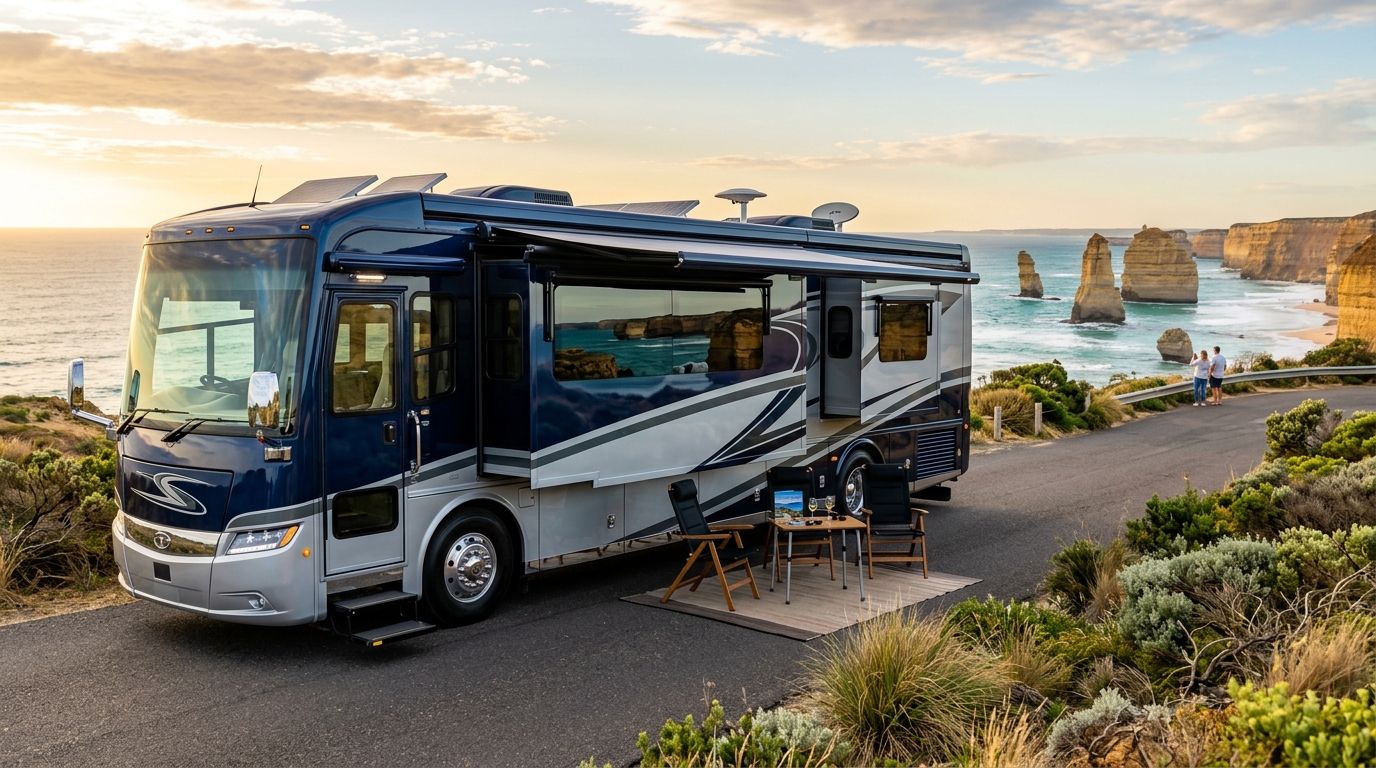
Coach-built bus motorhomes offer the most interior width and sleeping capacity of any category on this list, built on bus or coach chassis rather than a truck cab-chassis platform.
Luxury bus motorhome pros:
- Most sleeping and living capacity of any option here, suited to families or groups touring together
- Coach-width interior feels closer to a small apartment than a van conversion
- Comfortable on sealed highways and caravan parks
Luxury bus motorhome cons:
- Length and turning circle make narrow or corrugated outback tracks difficult, if not impossible
- Ground clearance is generally lower than a purpose-built 4x4 motorhome
Best for: groups touring sealed-road circuits rather than remote outback tracks. Verdict: Hold for outback overlanding, Buy for sealed-road group travel.
How we ranked these expedition vehicles
Each entry was assessed against the six criteria above: drivetrain capability, payload headroom, tank range, off-grid power, build integrity under corrugation, and service network reach. The ibeX 4x4 leads because it's the only option here purpose-built with a 4x4 drivetrain on a chassis designed for the load. Categories further down the list win on cost or group capacity, not outback capability.
Which expedition vehicle should you choose in 2026?
If remote unsealed touring is the plan for 2026, the Latitude ibeX 4x4 is the default pick — the 4x4 drivetrain on the Iveco Daily 70C chassis is built for that job specifically. Solo and couple travellers who want long range without the bulk should look at the Element 27, and anyone planning to live aboard full-time should compare the Meridian 30 against it. Budget-conscious buyers testing the waters can start with an off-road hybrid camper and step up once touring plans firm up.
FAQ
What's the best expedition vehicle for overland travel in Australia in 2026?
The Latitude ibeX 4x4 leads the category in 2026 because it pairs a genuine 4x4 drivetrain with the Iveco Daily 70C chassis, built specifically for unsealed outback touring rather than adapted from a two-wheel-drive base.
Is a 4x4 motorhome better than a converted 4x4 ute for the outback?
A 4x4 motorhome like the ibeX 4x4 offers full living space with off-road capability, while a converted ute or wagon trades comfort for a lighter, more manoeuvrable rig on the most technical tracks. The right choice depends on how much comfort you're willing to give up for track access.
How much ground clearance do you need for outback tracks like the Gibb River Road?
The Gibb River Road runs roughly 660 km of unsealed, corrugated surface, so a vehicle needs genuine 4x4 ground clearance and a chassis rated for that vibration load, not just a lifted suspension kit on a road-going base.
Can you drive an Iveco Daily 4x4 motorhome on a standard car licence?
Licence requirements depend on the vehicle's GVM and the rules in your state, and some Iveco Daily 4x4 configurations exceed the standard car licence threshold. Check with your local licensing authority before buying.
What's the difference between an expedition vehicle and a standard motorhome?
An expedition vehicle is built or configured for unsealed, remote touring with 4x4 capability, higher ground clearance, and off-grid power reserves, while a standard motorhome is optimised for sealed roads and caravan parks.
Is a luxury bus motorhome good for outback touring?
Luxury bus motorhomes carry more people and gear than any other option but their length and turning circle make narrow or corrugated outback tracks difficult. They suit sealed-road group touring better than remote overlanding.
How much solar power does an expedition vehicle need for off-grid touring?
The right solar and battery capacity depends on how long you plan to stay off-grid without shore power and how many appliances you run. Pairing solar with lithium battery storage is the standard approach for extended remote touring.
Where can you see the Latitude ibeX 4x4 in person?
Latitude Motorhomes builds its range, including the ibeX 4x4, at its factory in Burleigh Heads, Queensland, where buyers can book a visit to see the build in person.
One last thing
The biggest mistake overland buyers make in 2026 isn't picking the wrong chassis — it's underestimating payload. Water, fuel, tools, and a full pantry add weight fast, and a vehicle sitting near its GVM limit before you've loaded camping gear leaves no margin once you're on a corrugated track hours from help. Check payload headroom before you check floor plan photos.