No production electric motorhome is sold in Australia in 2026 — battery weight, chassis payload limits and outback charging gaps still rule it out for anyone touring beyond the east coast. Best practical alternative for off-grid power: a solar-equipped diesel motorhome on a chassis like the Iveco Daily 70C, which banks enough lithium capacity to run fridges, induction cooktops and climate control without a generator. Best for full-time living off-grid: a motorhome built around a larger solar array and lithium bank rather than shore power. Best for outback touring where there's no charger for a thousand kilometres: a 4x4 diesel motorhome with heavy-duty solar and a raised chassis. None of these are electric drivetrains — they're the closest thing the Australian market actually delivers this year.
- No fully electric motorhome is in production for Australian buyers in 2026 — payload and charging-network gaps make it impractical.
- Solar-equipped diesel motorhomes on chassis like the Iveco Daily 70C are the closest working alternative for off-grid power.
- Full-time living and outback touring both favour larger lithium banks and solar arrays over any electric-drivetrain promise.
- Latitude Motorhomes builds its Element 27, Meridian 30 and ibeX 4x4 on the Iveco Daily 70C at its Burleigh Heads factory.
Why this matters
Searches for "electric motorhome" in Australia are climbing, but the supply side hasn't caught up — and it won't for a while. A motorhome fit for touring needs enough range to cover the distances between Australian towns, and current battery-electric vans lose too much of their gross vehicle mass to the battery pack to leave meaningful payload for a habitation module, water tanks and furniture.
Charging infrastructure is the other half of the problem. Grey nomads touring the Nullarbor or the Kimberley in 2026 still cover stretches with no fast-charging station for hundreds of kilometres, while diesel and LPG remain available at every roadhouse. Until that changes, the realistic question for Australian buyers isn't "which electric motorhome should I buy" — it's "which motorhome gets me closest to off-grid independence without one."
That's the frame this guide uses. Latitude Motorhomes builds its Element 27, Meridian 30 and ibeX 4x4 on the Iveco Daily 70C chassis at its Burleigh Heads factory, and the models below are ranked on how close each gets to electric-style independence: solar capacity, battery autonomy and chassis efficiency, not a battery-electric drivetrain that doesn't exist yet in this category.
What makes the best off-grid alternative to an electric motorhome
- Lithium battery bank size — determines how many days you run appliances without plugging in
- Solar array output — the actual charging source when there's no electric hookup
- Chassis payload margin — how much weight is left over after water, gear and passengers before hitting GVM
- Off-grid autonomy — realistic days between power top-ups
- Build quality of the habitation module — insulation and sealing reduce the energy draw in the first place
- Servicing network — a diesel chassis still needs parts and mechanics wherever you're touring
At a glance
| Option | Best for | Standout feature | Key limitation |
|---|---|---|---|
| Solar-equipped motorhome | Off-grid power without an electric drivetrain | Lithium bank plus rooftop solar array | Still needs diesel for propulsion range |
| ibeX 4x4 / off-road motorhome | Outback touring beyond charging infrastructure | Raised chassis and heavy-duty solar mounting | Higher fuel use than road-biased layouts |
| Full-time living motorhome | Permanent off-grid residents | Larger house-battery and storage capacity | Bigger footprint, harder to park in cities |
| Element 27 | Luxury touring on an efficient chassis | Iveco Daily 70C base, Burleigh Heads build | Not a battery-electric option, by design |
1. Solar-equipped motorhomes: best alternative for off-grid power
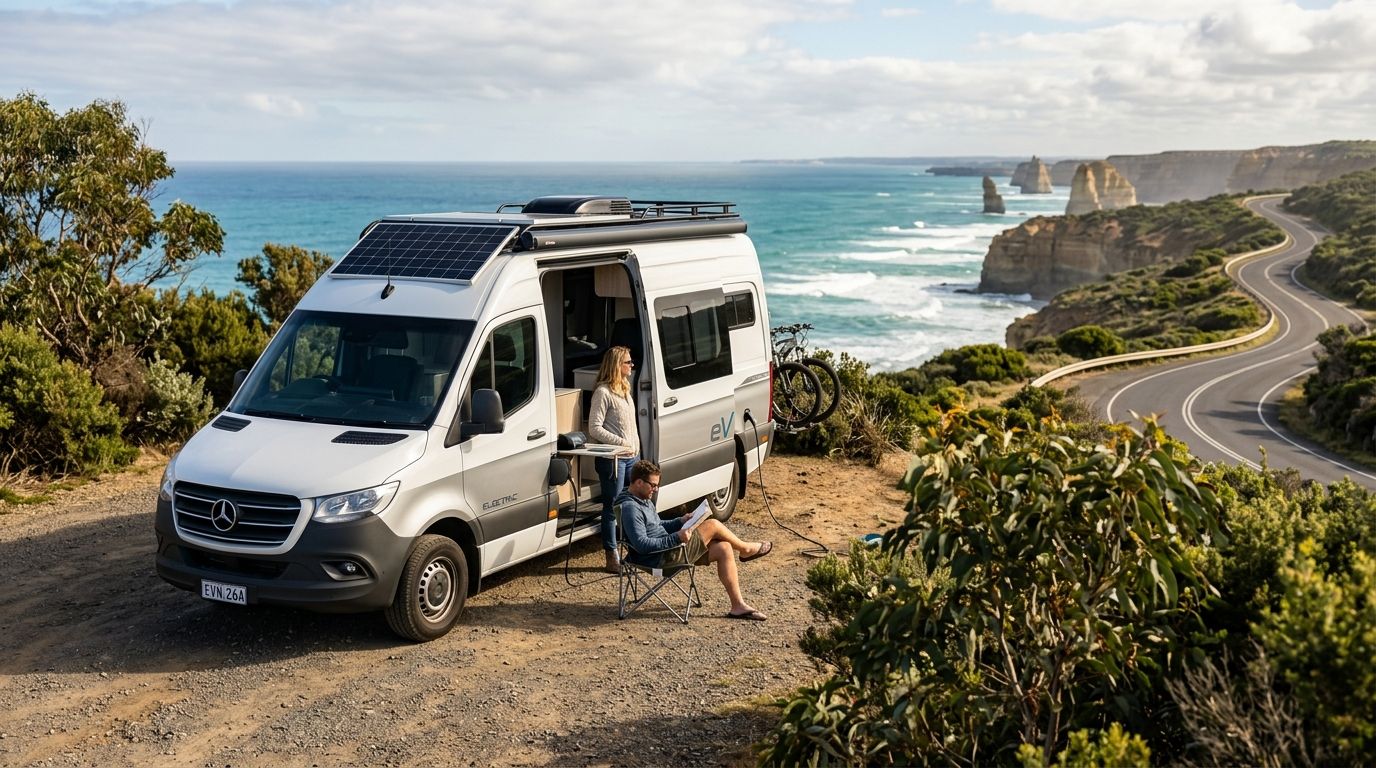
A solar-equipped motorhome pairs a rooftop solar array with a lithium battery bank so the coach systems run without shore power or a generator running constantly. It's diesel for propulsion and solar for house loads — the split that actually works in Australia in 2026.
Solar-equipped motorhome pros:
- Runs fridges, lighting and climate control off-grid for extended stretches
- No generator noise at free camps or national park sites
- Recharges passively while parked, unlike a plug-in electric vehicle
Solar-equipped motorhome cons:
- Solar output drops on overcast days or under tree cover
- Doesn't reduce fuel use for the drivetrain itself
- Battery bank size still caps how long you can run high-draw appliances
Solar-equipped motorhome pricing: check current configurations and pricing on the site — solar and battery capacity are typically specified per build.
Best for: buyers who want electric-style independence at the campsite without waiting for a battery-electric drivetrain to exist.
Verdict: Buy if off-grid power is the priority and you're not expecting a battery-electric motorhome anytime soon.
2. Off-road 4x4 motorhomes: best for outback touring past the charging network
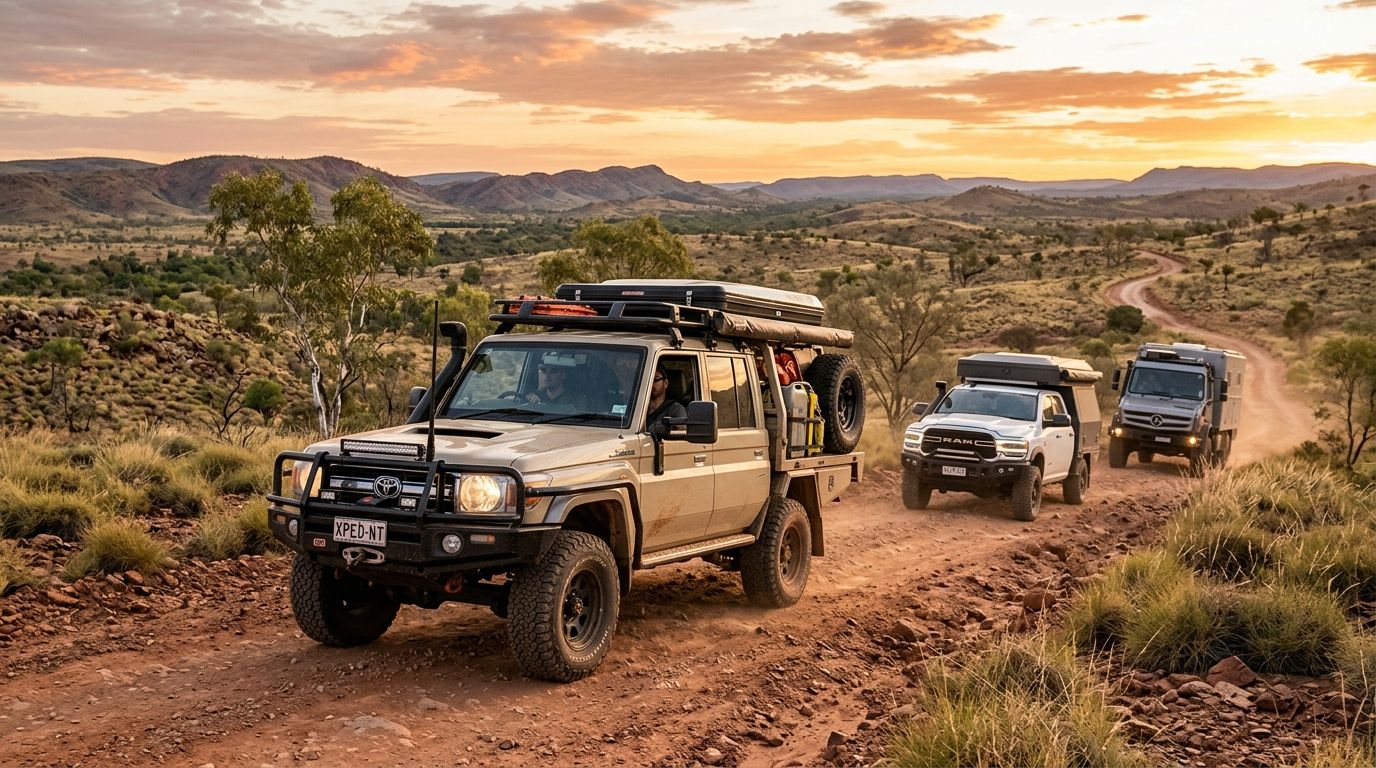
An off-road motorhome built for outback touring — like Latitude's ibeX 4x4 — pairs a raised, off-road-capable chassis with the same solar-plus-lithium approach, because outback routes are exactly where electric charging infrastructure doesn't reach yet.
Off-road 4x4 motorhome pros:
- Ground clearance and 4x4 capability for unsealed outback roads
- Solar mounting built for extended off-grid legs between towns
- Diesel range covers the gaps where no charger exists
Off-road 4x4 motorhome cons:
- Heavier fuel use than road-focused layouts
- Higher purchase cost than a standard touring motorhome
- Off-road driving still demands experience most first-time buyers don't have
Off-road 4x4 motorhome pricing: figures vary by specification — confirm current pricing directly.
Best for: buyers touring the outback where an electric motorhome's range and charging limitations would strand them.
Verdict: Buy for genuine remote touring; Skip if your routes stay on sealed east-coast highways.
3. Full-time living motorhomes: best for permanent off-grid residents
A motorhome built for full-time living leans harder on solar and battery capacity than a weekender model, because the buyer isn't returning to mains power every few days.
Full-time living motorhome pros:
- Larger house-battery and storage designed for permanent occupancy
- Layout prioritises daily livability over occasional-trip convenience
- Solar sized for continuous, not intermittent, off-grid use
Full-time living motorhome cons:
- Larger footprint makes city parking and tight campgrounds harder
- Higher upfront cost than a part-time tourer
- Still requires periodic diesel refuelling like any motorhome on the Iveco Daily 70C platform
Full-time living motorhome pricing: varies by model and fit-out — check current listings for specifics.
Best for: buyers who've sold the house and are living on the road year-round.
Verdict: Buy if permanent off-grid living is the plan; Hold if you're still testing full-time travel before committing.
4. Element 27: best luxury option on an efficient diesel chassis
The Element 27 is Latitude Motorhomes' Iveco Daily 70C-based luxury model, built at the Burleigh Heads factory. It's the shortest section here because the pitch is simple: it's a finished, road-ready luxury motorhome, not a concept waiting on battery technology.
Element 27 pros:
- Built on the proven Iveco Daily 70C chassis with an established parts and service network
- Manufactured on the Gold Coast, not imported as a shell
- Finished for touring today, in 2026, rather than pending future electric variants
Element 27 cons:
- Not a battery-electric drivetrain — diesel remains the propulsion source
- Solar and battery capacity are configured per build, not standardised
Element 27 pricing: check current pricing and configuration options on the site.
Best for: buyers who want a luxury motorhome available now rather than an electric model that doesn't exist yet.
Verdict: Buy if you want a finished, factory-built luxury option today.
Book a factory visit
See the Iveco Daily 70C build process at Burleigh Heads.
How we ranked
Each option was weighed against the six criteria above — battery bank size, solar output, chassis payload margin, off-grid autonomy, build quality and servicing network — because none of them can be scored against a battery-electric drivetrain that isn't for sale in Australia in 2026. The ranking reflects which option gets a buyer closest to electric-style self-sufficiency using the technology actually available today.
Which off-grid motorhome should you choose in 2026?
If you want the electric-style experience of running off-grid without a generator, the solar-equipped motorhome wins — it's the direct answer to what most people mean when they search "electric motorhome" in Australia right now. If your touring plans include the outback, the ibeX 4x4 is the safer buy, because range and charging gaps make a lightweight, road-only setup risky. Full-time residents should size up to a full-time-living configuration rather than stretch a weekend model past its limits.
“The realistic question in 2026 isn't which electric motorhome to buy — it's which motorhome gets you closest to off-grid independence without one.”
FAQ
Is there an electric motorhome for sale in Australia in 2026?
No fully electric motorhome is in production for the Australian market in 2026. Battery weight and chassis payload limits, combined with gaps in remote charging infrastructure, make a battery-electric drivetrain impractical for touring motorhomes right now.
What's the closest thing to an electric motorhome available now?
A solar-equipped motorhome with a lithium battery bank is the closest working alternative. It runs house systems off solar and battery power while still using a diesel chassis, such as the Iveco Daily 70C, for propulsion.
Can a motorhome run entirely on solar power?
A motorhome's house systems — fridge, lighting, climate control — can run on solar and battery storage for extended stretches, but the drivetrain itself still needs diesel or another fuel source. No motorhome sold in Australia runs its engine on solar.
Does Latitude Motorhomes make an electric motorhome?
Latitude Motorhomes builds the Element 27, Meridian 30 and ibeX 4x4 on the Iveco Daily 70C chassis at its Burleigh Heads factory. These are diesel-chassis luxury motorhomes, not battery-electric models.
Why don't electric motorhomes exist yet in Australia?
Battery packs large enough for motorhome range add significant weight, cutting into the payload left for water tanks, furniture and passengers. Australia's charging network also has long gaps outside major highway corridors, which limits electric range for remote touring.
What chassis do luxury motorhomes in Australia use?
Many Australian-built luxury motorhomes, including Latitude Motorhomes' Element 27, Meridian 30 and ibeX 4x4, use the Iveco Daily 70C chassis. It's a widely serviced commercial platform with an established parts network.
Are hybrid motorhomes available in Australia?
Hybrid drivetrains aren't a standard motorhome option in Australia in 2026. The practical hybrid approach most buyers use is a diesel chassis paired with solar and lithium battery systems for house power.
How much solar does a motorhome need for off-grid living?
Solar and battery capacity needs vary by appliance load and how many days you're off-grid between charges. Confirm the specific solar and battery configuration on any model you're considering rather than assuming a fixed figure.
One last thing
Iveco does build an electric variant of the Daily van in Europe under its Blue Power range — but that electric chassis isn't imported to Australia for motorhome conversion. Builders here, including Latitude Motorhomes, still start from the diesel Iveco Daily 70C, which means the "electric motorhome" most Australian buyers will actually drive in 2026 is a diesel chassis carrying a solar array and lithium bank, not a battery-electric drivetrain.