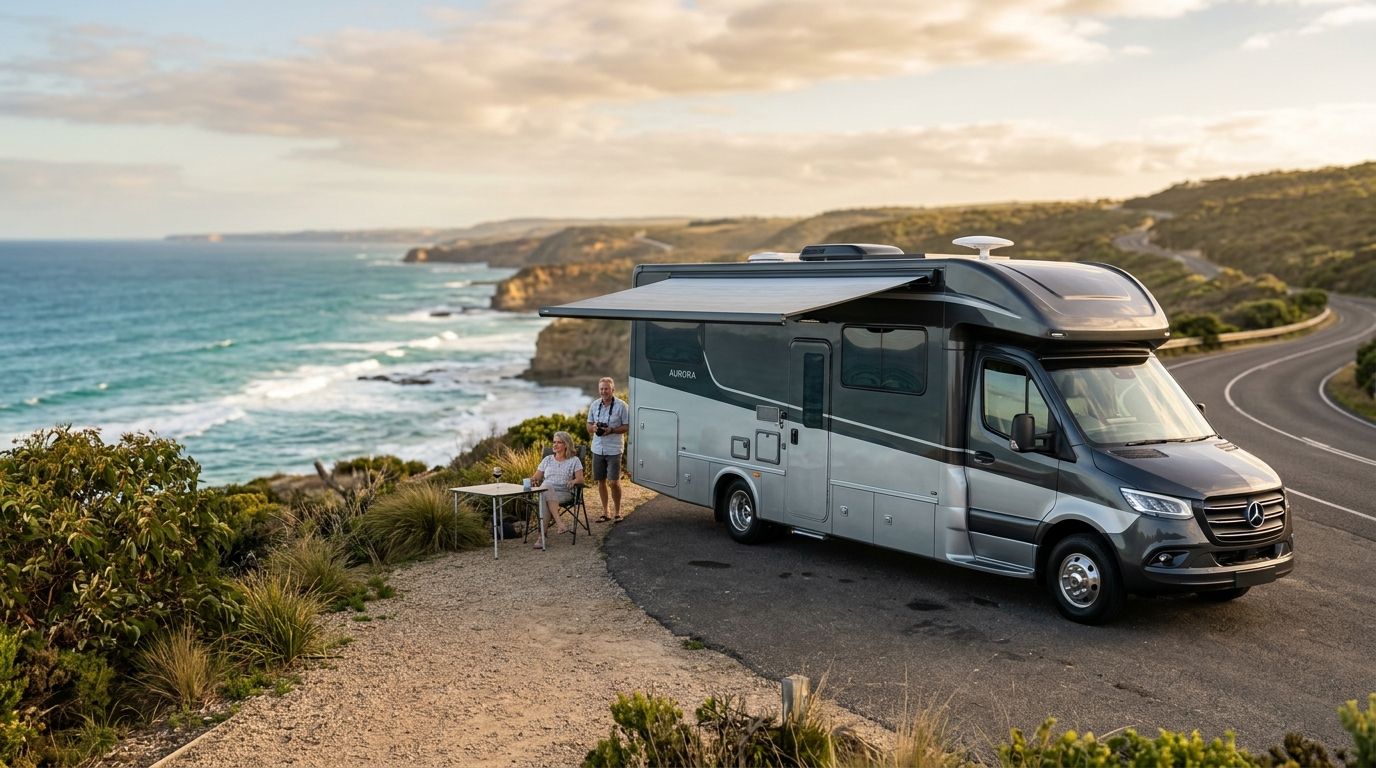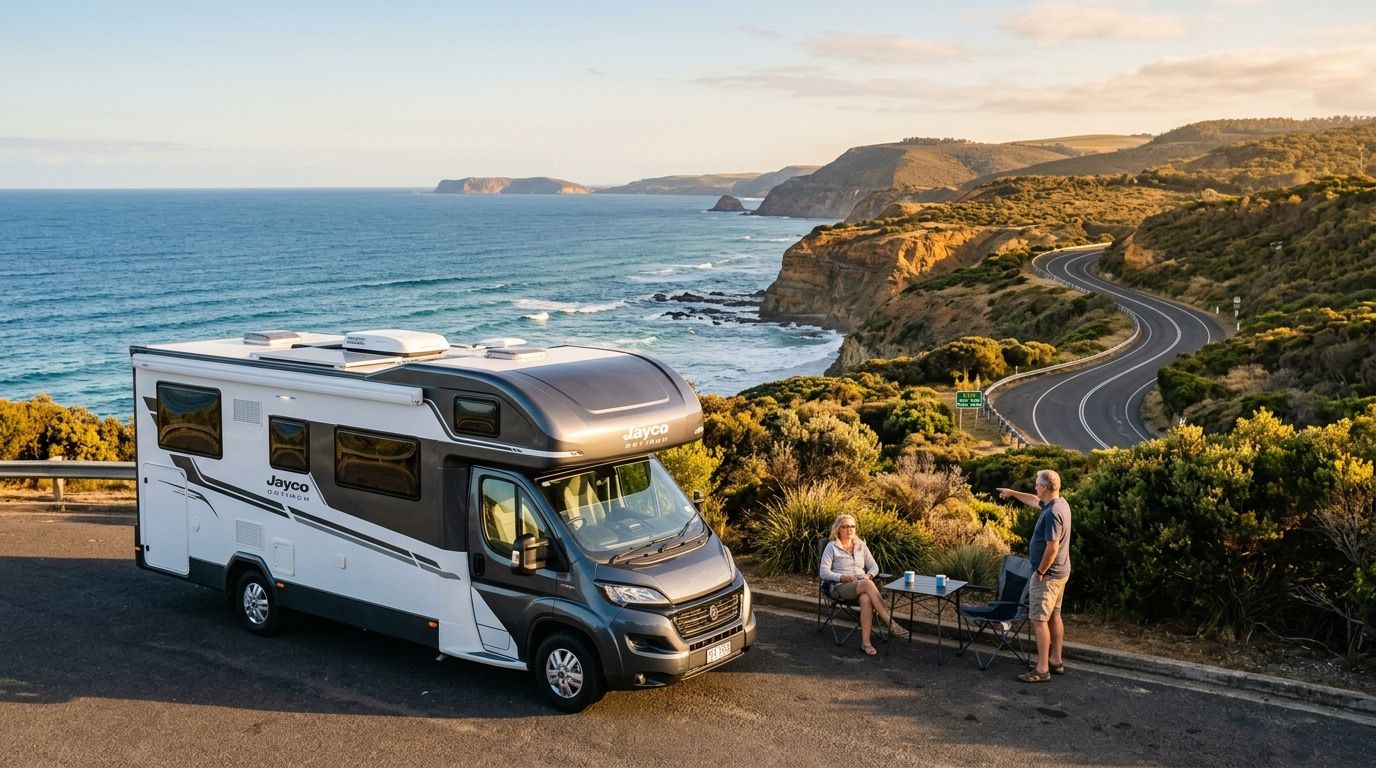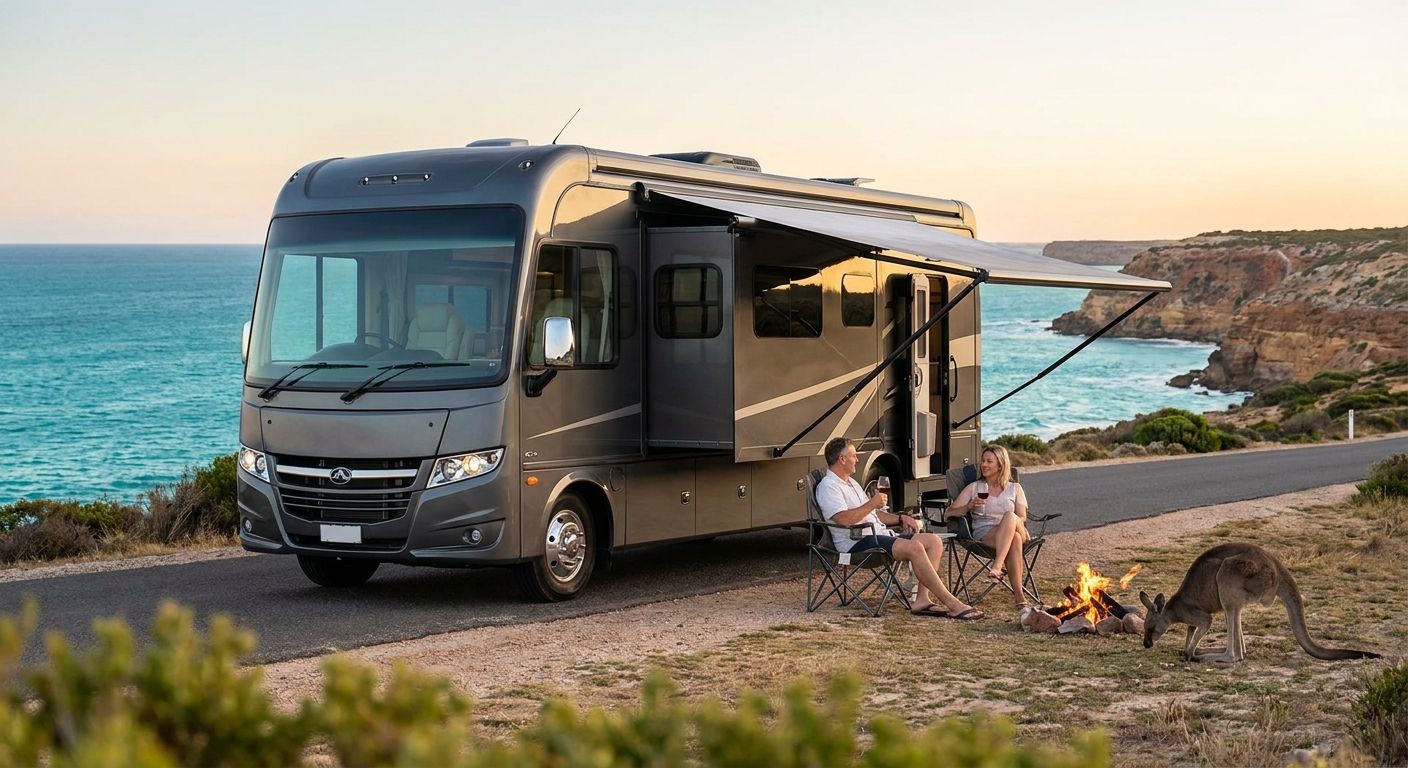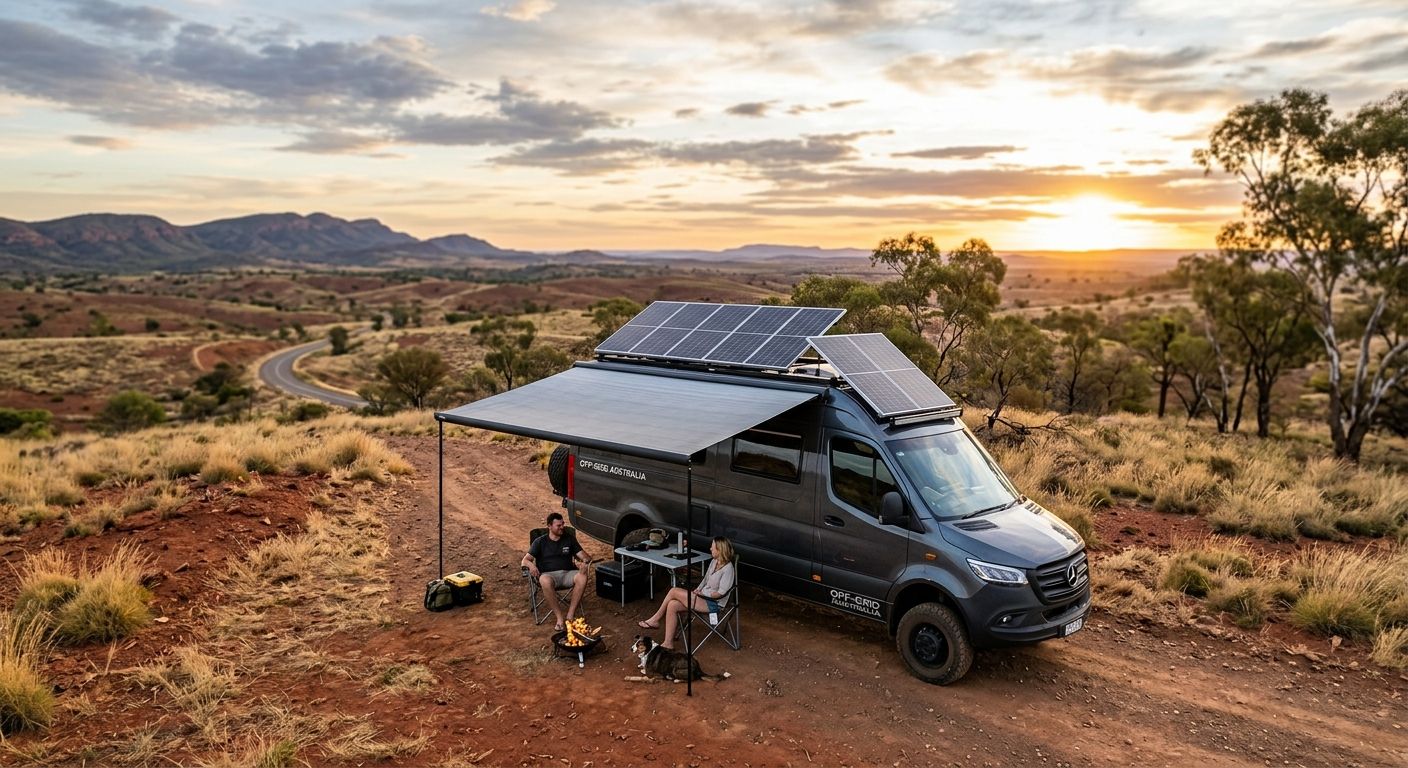
Best overall solar motorhome: Latitude Element 27. Best for large families: Latitude Meridian 30. Best for off-grid outback touring: Latitude ibeX 4x4. Best budget option: a pre-owned motorhome retrofitted with solar. Best for short weekend trips: an entry-level pop-top campervan with a single roof panel.
- Latitude Element 27 wins for full-time living in 2026 thanks to its Iveco Daily 70C base and integrated solar-and-lithium setup.
- Latitude Meridian 30 suits families who need extra floor space without changing the solar and battery architecture.
- Latitude ibeX 4x4 is the pick for outback touring where mains power isn't an option for days at a time.
- Retrofitted pre-owned units and entry pop-tops cover the budget end but carry real trade-offs on autonomy.
- Solar motorhomes in 2026 are judged on battery chemistry and charge control, not panel count alone.
Why this matters
A solar panel on the roof means nothing if the battery bank underneath it can't store what it collects or the charge controller can't manage the input properly. That's the mistake most buyers make when shopping for solar motorhomes in 2026 — they compare panel wattage on a spec sheet and skip the battery and inverter conversation entirely.
Latitude Motorhomes builds its range on the Iveco Daily 70C chassis out of Burleigh Heads, and every model in this guide gets judged against the same standard: how many days can it run off-grid before you need a generator or a powered site.
What makes the best solar motorhome
- Battery chemistry — lithium banks accept faster charge rates and tolerate deeper discharge than AGM, which matters when cloud cover cuts panel output.
- Charge controller quality — an undersized MPPT controller throttles what a large panel array can actually deliver.
- DC-DC charging from the chassis alternator — supplements solar on overcast days or when the vehicle is driving rather than parked.
- Roof space and mounting — panel area is capped by the roof footprint, so layout matters as much as raw wattage.
- Inverter capacity — determines whether the system runs a microwave and air-conditioning or just lighting and a fridge.
- Service and warranty support — solar and battery faults need a manufacturer network that can actually diagnose them, not just sell parts.
Solar motorhomes in Australia 2026: at a glance
| Model | Best for | Standout feature | Key limitation |
|---|---|---|---|
| Latitude Element 27 | Full-time living | Integrated solar and lithium on Iveco Daily 70C | Autonomy still drops with heavy air-conditioning use |
| Latitude Meridian 30 | Large families | Same solar architecture, more living space | Longer body adds weight the solar system has to work around |
| Latitude ibeX 4x4 | Off-grid outback touring | 4x4 drivetrain paired with off-grid solar setup | Built for remote touring, not tight urban parking |
| Pre-owned + retrofitted solar | Budget buyers | Lower upfront cost than a new build | Retrofit quality varies by installer, not standardised |
| Entry pop-top campervan | Short weekend trips | Single panel keeps the system simple | Not built for multi-day off-grid stays |
1. Latitude Element 27: best solar motorhome for full-time living
The Element 27 is built on the Iveco Daily 70C chassis at the Burleigh Heads factory and pairs its solar array with a lithium battery bank designed around continuous, not occasional, use. It's the model Latitude Motorhomes puts forward for buyers who live in the vehicle for months at a stretch rather than weekends. The layout and solar-and-battery combination are matched to that use pattern from the start, which is why it sits at the top of this list for motorhomes for full-time living.
Element 27 pros:
- Solar and battery system sized for daily, not occasional, off-grid use
- Built on the well-proven Iveco Daily 70C chassis
- Manufactured and supported directly out of the Burleigh Heads factory
Element 27 cons:
- Heavy appliance use (air-conditioning, microwave) still draws down the battery faster than solar can replace it on short days
- A single-model solar configuration means less room to customise panel layout than a bespoke retrofit
Best for: buyers making the motorhome their primary residence. Verdict: Buy.
2. Latitude Meridian 30: best solar motorhome for large families
The Meridian 30 shares the same Iveco Daily 70C base and solar-and-lithium approach as the Element 27, scaled into a longer body with more sleeping and living space. It's the right call when the trade-off is more people on board rather than more days off-grid. For buyers cross-shopping by footprint, it sits alongside other large motorhomes in Australia but keeps the same solar logic as its stablemate.
Meridian 30 pros:
- More living and sleeping space without a different solar architecture to learn
- Same chassis reliability as the rest of the Latitude range
- Suits families who still want genuine off-grid capability, not just extra beds
Meridian 30 cons:
- Extra length and weight mean the same solar system has more vehicle to support
- Larger footprint is harder to park at busy free camps than the Element 27
Best for: families who need space and off-grid capability together. Verdict: Buy.
3. Latitude ibeX 4x4: best solar motorhome for off-grid outback touring
The ibeX 4x4 adds a genuine 4x4 drivetrain to the Iveco Daily 70C platform, which changes the question from "how long can the battery last" to "how far off the bitumen can you actually get." It's built for touring routes where mains power and even generator fuel runs are days apart, which puts it in a different category to the on-road-focused Element 27 and Meridian 30. Anyone shortlisting from the off-road motorhomes for outback touring list should put this model near the top.
ibeX 4x4 pros:
- 4x4 capability opens up remote touring routes other motorhomes can't reach
- Off-grid solar setup matched to extended stays away from powered sites
- Same Iveco Daily 70C reliability as the on-road models
ibeX 4x4 cons:
- Overkill and harder to manoeuvre for buyers who mostly stay on sealed roads
- 4x4 componentry adds weight and complexity versus the standard chassis
Best for: outback and remote-touring buyers. Verdict: Buy.
4. Pre-owned motorhome with retrofitted solar: best budget option
A secondhand motorhome fitted with an aftermarket solar kit is the cheapest route into off-grid capability, and it's a genuine option in 2026 if the retrofit was done properly. The catch is quality control — a retrofit is only as good as the installer, and there's no factory standard behind it the way there is with a purpose-built system.
Retrofit pros:
- Lower cost of entry than a new solar-equipped build
- Existing vehicle can be upgraded incrementally as budget allows
Retrofit cons:
- Installation quality varies enormously between installers
- No single manufacturer warranty covers the combined vehicle-and-solar system
- Older chassis wiring may not handle a large charge controller without extra work
Best for: buyers prioritising upfront cost over a factory-integrated system. Verdict: Hold — get the retrofit inspected by someone who didn't install it before you buy.
5. Entry pop-top campervan: best solar motorhome for short weekend trips
A single roof panel and a modest battery bank is plenty for a two- or three-night weekend trip where mains power or a generator is never far away. It's the simplest system on this list, and that simplicity is the point — less to service, less to go wrong.
Entry pop-top pros:
- Simple system with fewer components to maintain
- Lower weight than a full off-grid solar-and-lithium setup
Entry pop-top cons:
- Not built for multi-day off-grid stays
- Battery bank runs down quickly with fridge and lighting load alone
Best for: weekend and short-trip campervanners. Verdict: Buy if that's genuinely your use case — Skip if you're planning full-time travel.
How the ranking works
Each model is ranked against the six criteria above — battery chemistry, charge controller quality, DC-DC charging, roof space, inverter capacity, and service support — not against panel wattage alone. That's why the Element 27, Meridian 30 and ibeX 4x4 sit at the top: the solar hardware is backed by a battery bank and support network sized for real off-grid use, not just a spec-sheet number.
Which solar motorhome should you choose?
If you're living in the vehicle full-time, the Latitude Element 27 is the default pick for 2026. Families needing more room without changing the underlying solar system should look at the Meridian 30, and anyone planning genuine remote touring should go straight to the ibeX 4x4. Budget-first buyers can make a retrofitted pre-owned unit work, but get the solar and battery work inspected independently before signing anything.
“A motorhome's solar system is only as good as its battery bank and charge controller — the panels are the easy part.”
Book a factory visit
See the Iveco Daily 70C build process at Burleigh Heads before you decide.
FAQ
What's the best solar motorhome in Australia in 2026?
The Latitude Element 27 is the best overall pick in 2026 for buyers living in the motorhome full-time, thanks to its integrated solar and lithium setup on the Iveco Daily 70C chassis. Families needing more space should look at the Meridian 30, and outback tourers should consider the ibeX 4x4 instead.
Is rooftop solar enough to run a motorhome off-grid?
Rooftop solar alone rarely covers heavy loads like air-conditioning or a microwave for extended periods. It works well paired with a properly sized lithium battery bank and DC-DC charging from the chassis alternator, which is how the Element 27 and Meridian 30 are configured.
How much solar do I need for full-time motorhome living?
There's no single number that fits every travel pattern — it depends on appliance use, climate, and how many days you expect to stay off-grid between charges. A motorhome built specifically for full-time living, like the Element 27, matches its solar and battery system to that continuous-use pattern from the factory.
Are lithium batteries better than AGM for motorhome solar?
Lithium batteries accept faster charge rates and tolerate deeper discharge cycles than AGM, which matters when solar input drops on overcast days. That's why lithium is the standard chemistry paired with solar in Latitude's 2026 range.
Can I add solar to a pre-owned motorhome?
Yes, retrofitting solar to a secondhand motorhome is a common budget route, but installation quality varies by installer and there's no single manufacturer warranty covering the combined system. Get any existing retrofit inspected independently before you buy.
Do solar motorhomes still need a generator as backup?
Most solar-equipped motorhomes benefit from a generator or mains backup for extended cloudy stretches or heavy appliance use like air-conditioning. Solar reduces reliance on generator fuel but rarely eliminates the need for it entirely on multi-day off-grid trips.
What chassis do Latitude Motorhomes use?
Latitude Motorhomes builds the Element 27, Meridian 30 and ibeX 4x4 on the Iveco Daily 70C chassis at its Burleigh Heads, Gold Coast factory. All three models share the same chassis reliability with different bodies and solar configurations.
Is the ibeX 4x4 good for off-grid outback touring?
Yes, the ibeX 4x4 pairs a 4x4 drivetrain with an off-grid solar setup, making it the Latitude model built specifically for remote touring routes away from powered sites. It trades some on-road manoeuvrability for that outback capability.
One last thing
The number buyers fixate on — total panel wattage — is the least useful spec on the sheet. Two motorhomes with identical panel arrays can behave completely differently off-grid depending on charge controller sizing and battery chemistry, so ask about the controller and battery bank before you ask how many watts are on the roof.