Large motorhomes in Australia cover everything from cab-chassis luxury builds to van-based Sprinter conversions, and the right pick depends on floorplan, chassis, and how many months a year you'll actually live in it. This guide ranks six large motorhomes sold in Australia in 2026, starting with the largest model built at Latitude Motorhomes' Burleigh Heads factory on the Gold Coast.
Best overall: Latitude Meridian 30. Best for full-time living: Latitude Element 27. Best for outback touring: Latitude ibeX 4x4. Best for first-time buyers: Jayco Conquest.
- Latitude Meridian 30 is the best large motorhome overall in 2026, built on the Iveco Daily 70C cab-chassis in Burleigh Heads.
- Latitude Element 27 wins for full-time living thanks to a shorter footprint that fits more caravan parks and driveways.
- Latitude ibeX 4x4 is the pick for outback touring and unsealed-road travel.
- Jayco Conquest suits first-time buyers who value the widest dealer and service network in Australia.
- Winnebago (built by Avida) and Trakka round out the list for highway comfort and garage-fit sizing.
Why this matters
Most large motorhomes on the Australian market fall into two build types: cab-chassis conversions like the Iveco Daily 70C, and van-based conversions on platforms like the Mercedes-Benz Sprinter. The difference isn't cosmetic — it changes payload, turning circle and how the motorhome handles on unsealed roads.
Many large motorhomes sit close to or above 4.5 tonnes gross vehicle mass, which in most Australian states requires a Light Rigid licence on top of a standard car licence. That single fact rules some large motorhomes out for buyers without the right licence class, so check it before you fall in love with a floorplan.
Full-time livers, weekend tourers and outback travellers all need different things from a large motorhome in 2026, which is why this list ranks by use case rather than a single leaderboard.
What makes the best large motorhome
- Chassis and payload: cab-chassis builds generally carry more payload headroom than van conversions of similar length
- Interior layout for daily living: bathroom size, kitchen bench space and storage matter more than badge
- Off-road capability: ground clearance, tyre choice and 4x4 configuration for unsealed-road touring
- Build origin and factory support: locally built and factory-direct versus imported and dealer-distributed
- Dealer and service network: how easy it is to get parts and servicing outside major cities
- Resale and pre-owned availability: whether secondhand units exist if you're not ready for a custom order
Large motorhomes in Australia at a glance
| Motorhome | Best for | Standout feature | Key limitation |
|---|---|---|---|
| Latitude Meridian 30 | Overall large motorhome | Largest floorplan in the Latitude range on Iveco Daily 70C | Factory-direct only, limited dealer footprint outside Queensland |
| Latitude Element 27 | Full-time living | Iveco Daily 70C cab-chassis with a shorter, more manageable length | Less floor space than the Meridian 30 |
| Latitude ibeX 4x4 | Outback and off-road touring | 4x4 configuration built for unsealed roads | Extra off-road hardware adds weight |
| Jayco Conquest | First-time large motorhome buyers | Widest dealer and service network in Australia | Mass-production finish rather than custom luxury fit-out |
| Winnebago (Avida) | Domestic highway touring | American-style large-motorhome layout under Australian licence | Bigger turning circle, not built for off-road use |
| Trakka | Garage-fit large motorhome | Mercedes-Benz Sprinter base keeps overall length shorter | Smaller floor area than cab-chassis builds |
1. Latitude Meridian 30: best large motorhome overall
The Meridian 30 is the largest model in Latitude Motorhomes' range, built on the Iveco Daily 70C cab-chassis at the Burleigh Heads factory and sold both new and pre-owned direct from the manufacturer. It's the pick for buyers who want the most interior space Latitude currently builds.
Latitude Meridian 30 pros:
- Largest floorplan in the Latitude range for long-stretch touring
- Cab-chassis build on the Iveco Daily 70C, a base known for stronger payload headroom than van conversions of similar length
- Factory-direct process means buyers can specify finishes during the build
- Pre-owned units available for buyers not ready to commission a custom build
Latitude Meridian 30 cons:
- Factory-direct sales mean fewer physical locations to inspect a unit before buying, compared to national dealer brands
- Custom builds run on a production schedule rather than off-the-shelf stock
- The 30 model's larger footprint needs more storage and parking space than the 27
Best for: buyers who want the biggest Latitude motorhome for extended touring. Verdict: Buy.
2. Latitude Element 27: best large motorhome for full-time living
The Element 27 shares the Iveco Daily 70C cab-chassis with the Meridian 30 but in a shorter, more manageable length — the model number reflects the shorter body, a naming convention common across the Australian motorhome industry. It's built for buyers planning to live in it for motorhomes for full-time living rather than short trips.
Latitude Element 27 pros:
- Shorter 27 length fits more caravan parks and home driveways than the Meridian 30
- Same Iveco Daily 70C cab-chassis base as the rest of the Latitude range
- Built locally at the Burleigh Heads factory with factory support
Latitude Element 27 cons:
- Less floor space than the Meridian 30 for couples wanting more room
- Same limited dealer footprint as the rest of the Latitude range
- Custom orders carry a build lead time
Best for: buyers planning to live in their motorhome full-time. Verdict: Buy.
3. Latitude ibeX 4x4: best large motorhome for outback touring
The ibeX 4x4 is Latitude's off-road-focused model, built on the same Iveco Daily 70C base as the Element 27 and Meridian 30 but configured for unsealed-road travel. It's the one to look at for off-road motorhomes for outback touring rather than caravan-park-only trips.
Latitude ibeX 4x4 pros:
- 4x4 configuration built for unsealed and outback roads
- Same Iveco Daily 70C base and Burleigh Heads build quality as the rest of the range
- Fits buyers who want one vehicle for both bitumen and dirt tracks
Latitude ibeX 4x4 cons:
- Off-road hardware adds weight versus the 2WD Latitude models
- Narrower use case if most of your travel stays on sealed highways
- Same factory-direct lead time as other Latitude builds
Best for: buyers whose touring plans include unsealed roads. Verdict: Buy for outback-focused travel, Skip if you stick to sealed highways.
4. Jayco Conquest: best large motorhome for first-time buyers
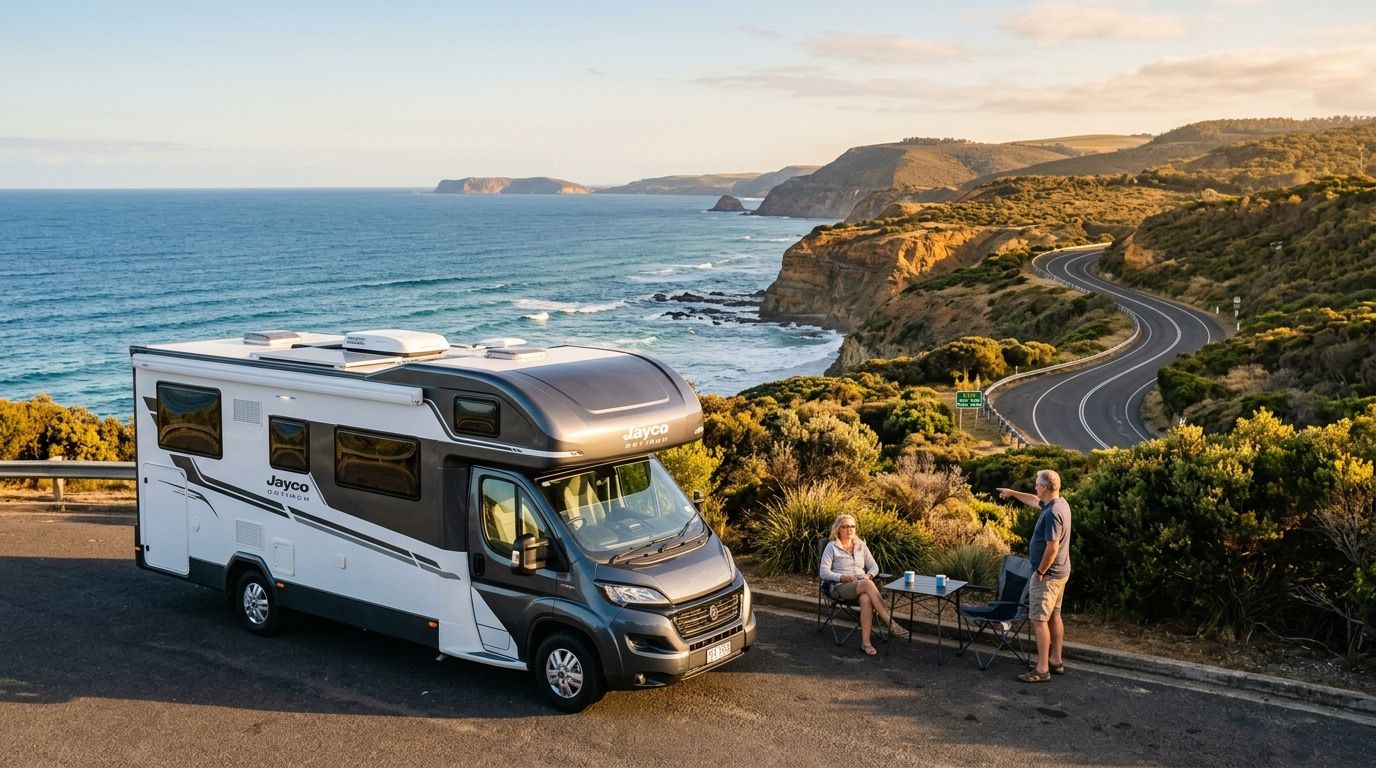
Jayco is Australia's largest local RV manufacturer, and the Conquest range covers large motorhome layouts sold through a national dealer network. It's a reasonable entry point for buyers who haven't owned a large motorhome before and want service centres close by.
Jayco Conquest pros:
- Widest dealer and service network of any brand on this list
- Established resale market with a wide range of secondhand stock
- Multiple floorplans to compare before ordering
Jayco Conquest cons:
- Mass-production build rather than a custom luxury fit-out
- Finish and inclusions vary by dealer stock rather than factory specification
- Less design flexibility than a factory-direct custom order
Best for: first-time large motorhome buyers who want a dealer nearby. Verdict: Buy for network access, Skip if custom Australian-built luxury is the priority.
5. Winnebago (Avida): best large motorhome for domestic highway touring
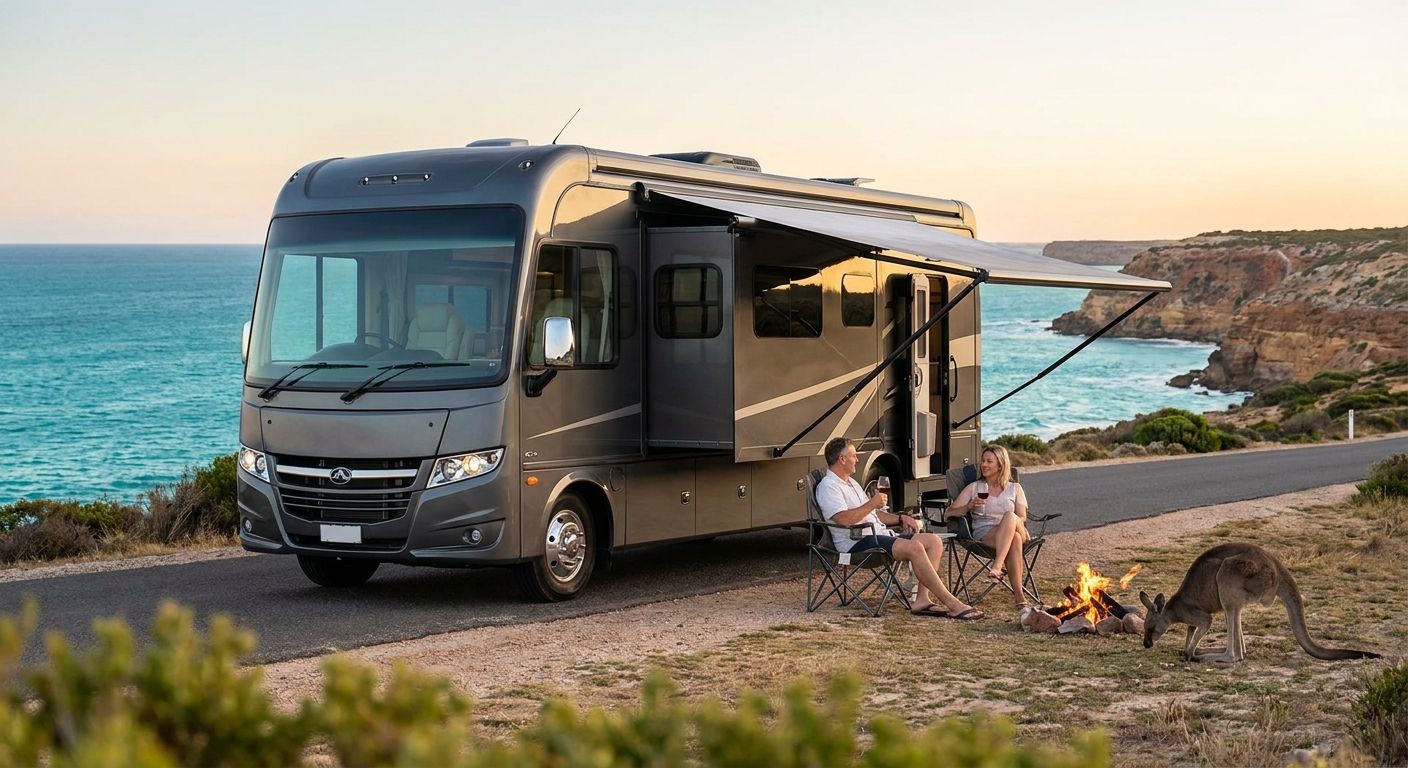
Winnebago-branded motorhomes sold in Australia are built by Avida under licence, using the American-style large-motorhome layout the badge is known for globally. They suit long highway stretches more than tight touring routes.
Winnebago pros:
- Familiar large-motorhome layout with long-haul highway comfort
- Established brand recognition, which helps at resale
- Layouts built around long-stay domestic touring
Winnebago cons:
- Bigger turning circle makes tight caravan parks and city driving harder
- Not built for off-road or unsealed-road use
- Fewer 4x4 options than the Latitude ibeX 4x4
Best for: buyers whose touring is mostly sealed-highway based. Verdict: Hold — Buy for highway comfort, Skip for outback tracks.
6. Trakka: best large motorhome for garage-fit sizing
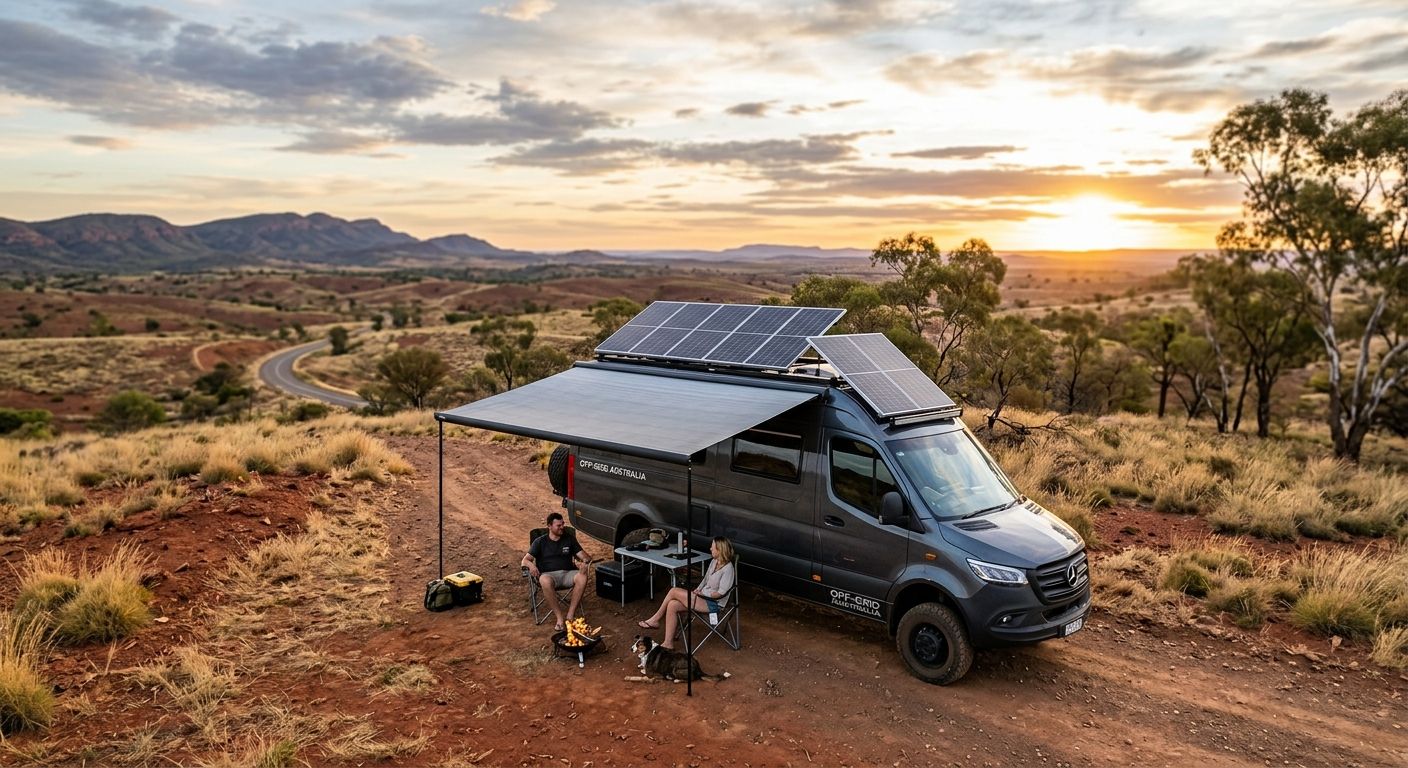
Trakka builds its motorhomes on the Mercedes-Benz Sprinter van base rather than a cab-chassis, which keeps overall length shorter while still offering large-motorhome amenities inside.
Trakka pros:
- Shorter overall length fits standard home garages
- Van-based build handles closer to a large van than a cab-chassis motorhome
- Established local manufacturer with a track record on the Sprinter platform
Trakka cons:
- Smaller floor area than cab-chassis builds like the Meridian 30
- Generally less payload capacity than an Iveco Daily 70C cab-chassis build
- Fewer built-in storage options than the larger Latitude models
Best for: buyers who need a large motorhome that still fits in a home garage. Verdict: Buy for garage storage, Skip if maximum interior space matters more.
“A cab-chassis build like the Iveco Daily 70C generally carries more payload headroom than a van-conversion motorhome of the same length.”
How we ranked these large motorhomes
Each entry above was matched to one criterion from the list — chassis and payload, interior layout, off-road capability, factory support, dealer network, or resale availability — so no two models compete for the same use case. Buyers comparing full ranges across Australian motorhome manufacturers will find the same pattern: no single brand wins every category in 2026, which is why the ranking above splits by job rather than crowning one overall winner across every use.
Book a factory visit
See the Iveco Daily 70C build in person at Burleigh Heads.
Which large motorhome should you choose?
For most buyers shopping large motorhomes in Australia in 2026, the Latitude Meridian 30 is the default pick — it's the largest floorplan on a cab-chassis base with factory support behind it. Full-timers who want a shorter, more manageable length should look at the Element 27, and anyone planning outback or unsealed-road travel should go straight to the ibeX 4x4. Buyers who want a nationwide dealer network over a custom build should compare the Jayco Conquest before deciding.
FAQ
What is the best large motorhome in Australia in 2026?
The Latitude Meridian 30 is the best large motorhome overall in 2026, offering the largest floorplan in Latitude's Iveco Daily 70C range. Buyers wanting full-time living space or off-road capability should compare the Element 27 or ibeX 4x4 instead.
Is a large motorhome better than a caravan for full-time living?
A large motorhome puts the engine, cab and living space in one vehicle, so there's nothing to tow or unhitch each time you move. A caravan needs a separate tow vehicle but can be left set up at a site while the tow vehicle is used separately.
Do large motorhomes need a special driver's licence in Australia?
Many large motorhomes sit at or above 4.5 tonnes gross vehicle mass, which requires a Light Rigid licence in most Australian states beyond a standard car licence. Check the specific GVM on the compliance plate before assuming your current licence covers it.
What chassis do large luxury motorhomes use?
Large luxury motorhomes in Australia are commonly built on cab-chassis platforms like the Iveco Daily 70C, or van bases like the Mercedes-Benz Sprinter. Cab-chassis builds generally offer more payload headroom, while van bases keep the overall length shorter.
Are 4x4 large motorhomes worth it for outback touring?
A 4x4 configuration like the Latitude ibeX 4x4 is worth it if unsealed roads and outback tracks are a regular part of your travel plans. If your touring stays on bitumen and caravan parks, the extra weight and complexity of 4x4 hardware isn't necessary.
What's the difference between a cab-chassis motorhome and a van conversion?
A cab-chassis motorhome, like those built on the Iveco Daily 70C, has a custom-built living pod fitted to a bare chassis, which usually allows more interior space and payload. A van conversion, like a Mercedes-Benz Sprinter build, keeps the original van body and shape, which limits floor space but keeps the overall footprint shorter.
Can you buy a large motorhome pre-owned?
Yes — several manufacturers, including Latitude Motorhomes, sell pre-owned units alongside new custom builds. Pre-owned availability depends on stock at the time, so check directly with the manufacturer or dealer.
One last thing
Model numbers like 27 and 30 typically reference the approximate body length in feet, a naming convention used across the Australian motorhome industry — so before comparing floorplans on a spec sheet, check the actual number against your garage, driveway or preferred caravan park's site length limit. It's a five-minute check that rules out half the shortlist before you waste time on a walkthrough.